
 vn
vn en
en ja
ja ko
ko zh
zh


Ha Giang's local specialties are an absolute must-try when you visit, and they make wonderful souvenirs to bring home.

When you're exploring Hà Giang, the local specialties are an absolute must-try – not just for their incredible flavors, but also because they make fantastic souvenirs to bring home. Beyond their unique tastes, these dishes beautifully reflect the rich cultural identity of this stunning highland region. Indeed, every single one of these local delicacies truly captures the very heart and soul of Hà Giang's culinary heritage.
Planning to explore Ha Giang and eager to savor its unique delicacies? Or perhaps you're looking for meaningful specialties to bring home as gifts? Don't worry, this article63Stravel.comwill help you discover right awayHa Giang specialties you must try when traveling and buy as gifts. Let's dive in!
Related articles:
- Top 6 Eco-Friendly Resorts in Hà Giang with Breathtaking Views
- Traveling to Hà Giang? What are the best souvenirs to bring back from this incredible region?
- 15 Affordable Ha Giang Homestays with Stunning Cloud Views
- Exploring Ha Giang: 10+ Famous Attractions You Won't Want to Miss
- Over 12 Must-Visit Historical Sites in Ha Giang
Ha Giang Specialties You Must Try When Traveling and Buy as Gifts
Ha Giang captivates travelers not only with its majestic landscapes but also with its rich, mountainous specialties. Let's explore the Ha Giang specialties you absolutely must try when visiting and consider buying as gifts!
Thang Den - A Famous Ha Giang Specialty
Amidst the crisp chill of a Ha Giang winter, there's nothing quite like savoring a hot bowl of Thang Den. This humble dish carries the distinctive flavors of the highlands, making it an unforgettable experience for anyone who tries it.
Thang Den resembles 'banh troi tau' (floating rice cakes) but has its own unique character, featuring a fragrant, chewy outer layer, a rich mung bean filling, and a sweet, clear ginger syrup with a subtle aroma. Enjoying a bowl of Thang Den in the cool air, feeling the warm sweetness spread, travelers feel warmed from within, fostering a deeper love and connection to the majestic land of Ha Giang.

Au Tau Porridge
Au Tau Porridge is one of Ha Giang's must-try specialties, not only for its unique flavor but also for its health-boosting properties. This porridge is made from Au Tau root – a precious medicinal herb that, after being soaked in rice water and simmered for many hours, becomes tender and blends perfectly with sticky rice, regular rice, and rich pork hock broth.
A steaming bowl of porridge, shimmering with its characteristic brown hue, is enhanced with a sprinkle of spicy pepper, fragrant cilantro, and creamy egg, creating an unforgettable flavor. Despite its elaborate preparation, visitors to Ha Giang can easily find this dish at roadside stalls or night markets, allowing them to fully savor the essence of highland cuisine.
Ha Giang Sour Pho
Ha Giang Sour Pho is a distinctive dish deeply rooted in the highland culture, blending the culinary essence of Vietnam and China with the unique flavors of the Northeast mountains. This dish impresses with its diverse ingredients, such as fried pork, roasted duck, Chinese sausage, and crispy roasted peanuts. The unique broth, made from sour vinegar, sugar, and tapioca starch, creates a delightful tangy, subtly sweet, and rich consistency.
When savored, each soft, chewy pho noodle blends with the rich fattiness of the meat, the refreshing coolness of basil, and the crunch of peanuts, all combining into an unforgettable symphony of flavors. More than just an ideal cooling dish for summer, Ha Giang Sour Pho is a culinary experience that visitors absolutely must try when exploring this northernmost land of Vietnam.

Shan Tuyet Tea
Shan Tuyet Tea is one of Ha Giang's must-try specialties for travelers and a perfect souvenir, embodying the refined flavors of the mountains. Grown on ancient tea trees, hundreds of years old, at altitudes ranging from 300 to 1,000 meters, Shan Tuyet tea absorbs the essence of the earth and sky, yielding buds covered in a snow-white down. This creates a pure aroma, a gentle astringency, and a deep, lingering sweet aftertaste.
Through meticulous processing, each tea leaf retains its pristine quality, offering a complete tea-drinking experience. When in Ha Giang, there's nothing more wonderful than sipping a hot cup of Shan Tuyet tea, fully appreciating the exquisite flavors of the highlands, and bringing some home as a gift for loved ones, a lingering echo of the mountains.
Cap Nach Pork (Armpit Pork)
Cap Nach Pork is one of Ha Giang's renowned specialties, captivating visitors from the very first bite. These small pigs are free-ranged on mountain slopes, feeding on wild vegetables and foraging for food, resulting in firm, lean meat with crispy skin and a naturally sweet flavor.
When prepared, Cap Nach pork is often grilled whole over hot coals, roasted until crispy, or steamed with mountain spices, delivering a rich, irresistible aroma and flavor. A piece of perfectly grilled, slightly charred meat, dipped in salt, pepper, and lime or a special highland dipping sauce, paired with fresh wild vegetables, is sure to leave an unforgettable impression on diners.

Corn Wine
Ha Giang Corn Wine is not just a traditional beverage but also a cultural symbol of the rocky plateau. Fermented from carefully selected corn kernels combined with unique forest leaf yeast, corn wine boasts a gentle aroma, a smooth sweetness, and a distinctive warm, lingering aftertaste.
The people of Ha Giang consider corn wine an indispensable part of parties and festivals, serving both to strengthen bonds and to ward off the highland chill. If you have the chance to visit, a bottle of pure, richly flavored mountain corn wine is definitely a Ha Giang specialty you must try and buy as a gift.
Dong Van Rolled Cakes (Banh Cuon)
Dong Van Rolled Cakes are unlike any 'banh cuon' you've ever known. While in the lowlands, 'banh cuon' is typically served with sweet and sour fish sauce, in Ha Giang, this dish is enjoyed with a hot, rich bowl of simmered bone broth, topped with scallions and spicy pepper.
The thin, soft rice paper wraps around a generous filling of minced meat and wood ear mushrooms, sometimes even including an egg yolk, creating an unforgettable rich flavor. Especially in the cool highland weather, sitting at a small roadside stall, savoring each piece of rolled cake dipped in warm broth, is undoubtedly a wonderful experience when visiting Ha Giang.
Trang Kim Chicken Pho
Trang Kim Chicken Pho is one of Ha Giang's specialties that visitors cannot miss when exploring the rocky plateau. At first glance, this dish might seem similar to traditional chicken pho, but its unique difference lies in the firm, golden, and enticing chicken pieces.
The chicken used is the H'Mong hill chicken, raised naturally, giving it a perfect chewiness, sweet meat, and distinct crispy skin. The pho broth is simmered meticulously from bones, blended with spices like cinnamon, star anise, and black cardamom, creating a rich, alluring aroma. The soft, non-mushy pho noodles, when combined with the chicken and flavorful broth, deliver an unforgettable taste, especially when enjoyed in the cool Ha Giang air.

Smoked Buffalo Meat (Thit Trau Gac Bep)
Smoked Buffalo Meat is one of Ha Giang's must-try specialties for travelers and a great souvenir. This dish originated from the Black Thai people and is prepared using traditional methods to preserve meat for extended periods.
After cleaning, the buffalo meat is thoroughly marinated with distinctive spices like 'mac khen' (Sichuan pepper), 'hat doi' (forest pepper), chili, and ginger, then hung over the kitchen hearth to be naturally smoked for about 2-3 months. This process gives the meat a beautiful dark brown color, a fragrant smoky aroma, and a sweet, chewy, rich mountain flavor. Enjoying smoked buffalo meat with a bit of Ha Giang corn wine in the cool weather will certainly be an unforgettable experience.
La Chi Rat Meat
Among Ha Giang's specialties, La Chi Rat Meat is perhaps the most intriguing name for many visitors. During the ripe rice season, the fields of the La Chi people are abundant with plump field rats, providing a natural source for preparing this unique dish.
The local people have many ways to prepare rat meat, from grilling over hot coals and steaming with lemongrass to stir-frying until crispy or cooking in a 'giả cầy' (mock dog meat) style, each offering a distinct flavor. La Chi rat meat has a very characteristic sweet chewiness and rich fattiness, quite different from other regions.
While it might initially make some hesitant, once you taste it, you might very well be won over by the rich flavor of this dish. If you have the chance to visit Ha Giang, don't miss the opportunity to discover this unique and delicious specialty!

Bac Me Bamboo-Cooked Rice (Com Lam)
Amidst the myriad of delicious dishes on the rocky plateau, Bac Me Bamboo-Cooked Rice retains a special allure thanks to its fragrant, chewy flavor and elaborate preparation. Made from round, soft, and sticky Bac Me rice, the grains are soaked in spring water, then placed into fresh bamboo tubes, mixed with a pinch of salt, and slowly roasted over hot coals. The aroma of the sticky rice blended with the scent of roasted bamboo creates an irresistible appeal.
When enjoying it, people typically peel off the charred outer layer, cut it into small rounds, and dip it in sesame salt, galangal salt, or eat it with grilled meat or chicken. A Ha Giang specialty you must try when traveling and buy as a gift, Bac Me Bamboo-Cooked Rice is not just a rustic dish but also embodies the essence of the Northwest mountains.
Buckwheat Cake (Banh Tam Giac Mach)
Amidst the vibrant season of buckwheat flowers, Ha Giang captivates not only with its vast fields of pinkish-purple hues but also with its unique Buckwheat Cake. A Ha Giang specialty you must try when traveling and buy as a gift, this cake is made from dried buckwheat grains, finely ground, then kneaded with water to form flat, round cakes. After steaming, the cakes are grilled over hot coals, resulting in a crispy golden crust, a soft and fluffy interior, and a distinctive sweet, nutty, and rich flavor.
Today, buckwheat cakes are not only found in local households but are also widely sold in markets, becoming a favorite among tourists. Savoring a warm cake amidst the cool highland weather, you will fully experience the flavors of Ha Giang's land and sky.
Hunchback Banh Chung (Banh Chung Gu)
Among the delicious highland dishes, Hunchback Banh Chung is a Ha Giang specialty deeply imbued with the cultural essence of the Red Dao people. The cake's small, slightly hunched shape evokes the image of diligent highland women carrying rice and corn up to the fields daily. Beyond its profound meaning, Hunchback Banh Chung also impresses diners with its distinctive delicious flavor. Fragrant sticky rice, a rich mung bean filling, and savory fatty pork are all skillfully wrapped in lush green 'dong rieng' leaves, creating an appealing color and a gentle aroma. More than just a dish for Tet or festivals, Hunchback Banh Chung is a specialty that visitors absolutely must try when coming to Ha Giang.

Grilled Moss
Grilled Moss is a dish that seems strange yet familiar, a unique Ha Giang specialty of the Tay ethnic group. At first glance, few would imagine that stream moss could become a delicacy, but with their skill and deep understanding of local cuisine, the Tay people have transformed this rustic ingredient into an unforgettable flavor.
After being cleaned, fresh moss is marinated with distinctive spices like 'mac khen' (Sichuan pepper), salt, lemongrass, and ginger, then wrapped in 'dong' leaves and grilled over hot coals. When cooked, the moss emits a subtle aroma, with a nutty, refreshing taste that is both unique and captivating.
Beyond its appealing flavor, grilled moss is also considered a valuable remedy for detoxification, body cleansing, and health enhancement. If you have the chance to visit Ha Giang, don't hesitate to try this dish to fully experience the essence of highland cuisine.
Seedless Crispy Persimmon
If you visit Ha Giang in autumn, especially in October-November, you absolutely cannot miss the Seedless Crispy Persimmon – one of Ha Giang's must-try specialties for travelers and a perfect souvenir. This type of persimmon is also known as Quan Ba Crispy Persimmon, as this region is where it is widely grown and produces the best quality fruit.
Ha Giang crispy persimmons stand out with their thin, smooth skin. When bitten into, they offer a satisfying crunch and a naturally sweet, non-astringent flavor. Besides being eaten fresh, persimmons are also processed into pickled persimmons. While Da Lat is famous for its wind-dried persimmons, Ha Giang captivates visitors with its plump, sweet, crispy persimmons, making them a wonderful gift after any trip.
Tao Meo (Docynia indica) Fruit
Ha Giang Tao Meo fruit is not only a characteristic fruit of the rocky plateau but also considered a precious herb with many health benefits. This apple-like fruit has a distinctive sour and astringent taste, which becomes subtly sweet when ripe. It is often used to make wine, syrup, or processed into appealing dishes.
Notably, Tao Meo wine is renowned for its ability to aid digestion, stabilize blood pressure, and boost cardiovascular health. If you have the chance to visit Ha Giang, don't forget to buy some Tao Meo fruit as a gift for your loved ones. This is not only a Ha Giang specialty you must try when traveling and buy as a gift, but also a meaningful and healthy present imbued with the flavors of the Northwest mountains.

Mint Honey
Amidst the rocky plateau of Ha Giang, where hillsides are covered in the purple hues of mint flowers, mint honey becomes a rare and unmissable specialty. This honey has a shimmering greenish-yellow color, a characteristic gentle aroma, and a sweet, refreshing taste with a hint of mint, creating an invigorating sensation from the very first taste.
More than just an exquisite gift from nature, mint honey also offers numerous health benefits, such as nourishing the body, boosting immunity, and supporting the treatment of respiratory ailments. If you're looking for a Ha Giang specialty you must try when traveling and buy as a gift, mint honey is definitely a perfect choice – both nutritious and rich in mountain flavors.
Ha Giang Stone Cake (Banh Da)
Ha Giang Stone Cake is a rustic dish that possesses a unique quality found nowhere else. True to its name, the cake has a rough, natural appearance, much like pebbles found in a stream. This is because, after preparation, the cakes are preserved by being submerged directly in a stream for days, or even months. The moss clinging to the outside makes the cake look exactly like a natural stone, but once scraped clean, it reveals a pristine white, soft, and smooth interior.
The people of Ha Giang have many ways to enjoy stone cake; it can be sliced into strands and eaten like vermicelli, or cooked with palm sugar syrup and sprinkled with roasted peanuts, creating a refreshing, sweet, and appealing snack. Simple and rustic, yet embodying the creativity of the highland people, stone cake is not just a dish but also a part of life, intertwined with the childhoods of countless generations here. If you have the chance to visit Ha Giang, don't forget to try this peculiar yet fascinating specialty!

Ha Giang is not only beautiful for its majestic mountains but also entices visitors with its unique dishes, rich in highland flavors. If you have the opportunity to set foot here, don't forget to savor and bring home theseHa Giang specialties you must try when traveling and buy as giftsto fully experience the culinary essence of Vietnam's northernmost region!
Tuyen Quang 4002 view
Update day : 13/02/2025


Monuments close by
See all
Relics of French Fort and Lung Ho citadel wall
The French Fort relic and Lung Ho citadel wall are located in Lang Qua village, Lung Ho commune, Yen Minh district, Ha Giang province. The fortress and the city wall are two separate areas and are located about 2km apart, at an altitude of 742m above sea level. The French Fort and Lung Ho wall relics are 106km north of Ha Giang city. According to French documents, in 1907 Duong Thuong land belonged to Dong Minh canton, Yen Minh commune, Ha Giang province. During the inspection trip to the Dai Mien, Tieu Mien, Yen Minh, Yen Dinh, Du Gia, and Duong Thuong regions of Lieutenant Colonel Boifacy, commander of the 3rd military force, in report No. 1165, September 1913, this land " needs to be monitored and that is why there must be Duong Thuong post..." After this inspection trip, the work of planning to build a new post was gradually carried out. The old Duong Thuong post, now Lung Ho post, was built and completed in the years 1935 - 1940. The work of building the post was extremely difficult, they forced people in the surrounding area to work as laborers and servants. Carrying stones and water for construction, anyone who did not comply was beaten or shot to death. Citadel wall: The citadel wall is nearly 2km away from the fort and is arranged based on natural conditions along the mountain slopes on both sides of the unique road connecting Lung Ho and Yen Minh with the purpose of controlling goods, people and horses in this area, according to the report. The unit will contact the station about 2km away. The main material for building the wall is mountain stone, taken from the construction site and surrounding areas in many different sizes. The mortar used to build is mainly sand mixed with lime, without cement. . Lung Ho Fort: The fort was built on high, fairly flat land facing East - West. The length of the surrounding wall is nearly 200m and is equipped with firing positions. The firing positions all have observation holes on the outside. The main material for building the wall is mountain stone, taken from the construction site and surrounding areas in many different sizes. The mortar used to build is mainly sand mixed with lime, without cement. . The design of the station includes a horizontal block and a vertical row of houses on the west side; The area of vertical houses and watchtowers in the East; Between the East and West areas is a large area of land. In general, many construction items were dilapidated and damaged, and almost the entire roof of the vertical and horizontal rows of houses were dismantled. Militarily, Lung Ho Fort and wall are large-scale works with an important position blocking the road from Lung Ho to Duong Thuong, and at the same time preventing revolutionary propaganda activities in our Duong Thuong region during the period. this time. The work is evidence of a historical period of French occupation and activities in the remote, mountainous area of Ha Giang province. Under the control and enslavement of the French colonialists in the Duong Thuong area, people's lives fell into poverty. Implementing the leadership resolutions of the Northern Region Party Committee and the Cao - Bac - Lang Interprovincial Party Committee. “At the end of 1944, comrade Viet Hung carried out the task of opening up the communication route from Cao Bang - Bac Can - Ha Giang to Yunnan (China) to welcome officers and transport weapons from abroad to the country. Comrade Viet Hung came to Lung Ho, Duong Thuong built a base, using Duong Thuong as a base, wherever Viet Minh cadres went, they received support from their compatriots. On March 9, 1945, the Japanese fascists overthrew France. In Duong Thuong (Yen Minh), Colonel Dao Van At panicked and fled the station. Seizing that opportunity, Viet Minh officers in Duong Thuong held an emergency meeting, occupied Duong Thuong station, destroyed the warehouse, took corn and rice to distribute to the people and set up a guard station outside the base area, which was carried out very urgently. On March 16, 1945, we captured Duong Thuong station, owned and completely controlled the Duong Thuong area, from here Viet Minh cadres spread to the base to lead the movement. Along with Sung Chu Da relic site, Duong Thuong revolutionary base, Mau Long cave is recognized as a national scenic spot, Du Gia national park and Gau Tao, Long Tong, Moon Bridge, and Cap Sac Festivals. , Thuong Tho... Notably, the Tay People's Fish Festival is held in Mau Due commune. Along with the direction of the district and province in the coming time, the Lung Ho Fort and wall relics will continue to be attractive destinations for tourists when coming to Yen Minh. Source: Ha Giang Provincial Party Committee Propaganda Department
Tuyen Quang
9734 view
Rating : National monument

Ha Giang Ky Dai Relics
Ky Dai relic is located on March 26 Square in Nguyen Trai ward, Ha Giang city. Ky Dai is a place to commemorate the event of Uncle Ho visiting and talking with more than 16,800 ethnic minorities in Ha Giang province on March 27, 1961. On this occasion, Uncle Ho advised the people of all ethnic groups in Ha Giang province the following 8 main contents: First of all, all ethnic groups must unite closely, love and help each other like brothers. Second: People must strive to increase production, and practice thrift to make everyone warm, clothed, and fed. Third: To produce well, there must be enough water, lots of fertilizer and improved agricultural tools. Fourth: It is necessary to develop raising buffaloes, cows, pigs, chickens... which are a great source of profit and a source of fertilizer for upland fields. Fifth: Exploiting forest products, protecting forests and planting forest trees, growing fruit trees and medicinal trees. Sixth: People must pay attention to hygiene. To maintain health, they must eat and drink cleanly, wear clean clothes, and live cleanly. Health is good for productive labor. Seventh: People must try to eliminate illiteracy, must know how to read and write, then their business can progress. Eighth: The lives of the Cao Cao people are more difficult than those of people in other places. People at all levels and officials from the area to the district need to try their best to help the Cao Cao people overcome difficulties and build new life. Uncle Ho's advice penetrated deeply into the hearts of the people of Ha Giang ethnic groups in the cause of building and developing Ha Giang province in recent times. Ky Dai was recognized by the Ministry of Culture and Information (now the Ministry of Culture, Sports and Tourism) as a national monument in 1993. On March 30, 2001, the People's Committee of Ha Giang province started construction of the Square and cluster. The monument in front of Ky Dai's gate is named March 26 Square. The square includes the entire former stadium. In the middle of the square is a group of monuments called "Uncle Ho and his compatriots of all ethnic groups in Ha Giang". The statue model was created by sculptor Nguyen Phu Cuong and constructed by the Central Fine Arts Company. The project is over 11 meters high, includes 200 stone blocks, and weighs 600 tons. The image of Uncle Ho standing in the middle of a group of 7 characters, standing lovingly near him are two children of the Mong and Nung ethnic groups. Standing a little lower is a young girl of the Kinh and Dao ethnic groups. Behind are the images of a border guard soldier and a Tay officer, with radiant eyes as if wanting to record every teaching of Uncle Ho. The composition of the group of statues blends together, linked by a clear, vivid emotional thread. The formation of that rhythm is an intentional creative and symbolic treatment of the supporting block, giving viewers a feeling of the majestic space of Ha Giang's mountains and forests with layers of clouds flying and harmonizing with each other. with layers and layers of terraced fields.... With the advantage of the monument being placed in the square, the project has a monumental space with multi-directional, multi-dimensional perception. This is a cultural project - a gathering place for a large number of people to admire the majestic beauty of the project and conduct community activities. Ky Dai and March 26 Square have become places to visit for domestic and foreign tourists. It is a place for community cultural activities of people of all ethnic groups in Ha Giang. Source: Department of Culture, Sports and Tourism of Ha Giang Province
Tuyen Quang
9281 view
Rating : National monument

Cang Bac Me National Historical Relic Area
Bac Me Cang - a historical relic during the resistance war against the French, is located on the slopes of Dragon Mountain in Don Dien village, Yen Cuong commune, Bac Me district, Ha Giang province. Bac Me Cang was built by the French before 1938 during their occupation of Ha Giang. The French chose to build here because of its important strategic location, easy control over a large area, and convenient for French military activities during their occupation here. Bac Me Cang is built on the rugged, soaring rocky slopes. Behind is Dragon Mountain as a shield to protect this post, in front is the Gam River, making it easy to observe and cover the situation. Bac Me stretch was originally built by the French to control the arterial road connecting 3 northern mountainous provinces: Ha Giang, Tuyen Quang, and Cao Bang. When it was first built, it was used as a military camp to gather French soldiers and henchmen during the occupation of this area. The reason this place is called Cang Bac Me is because in French, Cang means "fort", and in the local language, Bac Me is "Pac Mia", which means hut door. Refers to the post where the troops were stationed as well as where the French colonial observation post was located. Bac Me stretch was built including a system of posts, information houses, and guard posts to serve their ruling purposes. From 1939 to 1942, Cang Bac Me was turned into a prisoner of war camp by the French to detain communist soldiers they captured. There are many of our patriotic revolutionary comrades detained here such as: comrades Xuan Thuy, Hoang Hui Nam, Hoang Bac Dung, Le Gian, Nguyen Hong, Dang Viet Chau... Taking advantage of the key terrain of the post built in the sacred forests and dangerous waters of this area. They arrested political prisoners and patriotic communist soldiers and imprisoned them here. Every day, those soldiers had to endure torture and labor in harsh and miserable conditions under their strict control in order to extinguish the patriotism and revolutionary will of their children. They are called Viet Cong. But all those hardships could not overcome the stubborn will of our people. The patriots turned pain into action, turning prisons into political schools. They established Party cells in prison, actively distributed leaflets and contacted people and soldiers outside. Faced with strong fighting activities of prisoners and people in the area, they were forced to change the place of detention with their communist comrades to other places. By 1992, Bac Me Cang was recognized as a national revolutionary historical relic. Over time this place has been greatly damaged. In 2003, the Department of Culture, Sports and Tourism of Ha Giang province coordinated with agencies in the province, along with Bac Me District, to restore a number of items of the relic such as: watchtower, prison, up and down road... Source: Ha Giang Department of Culture, Sports and Tourism
Tuyen Quang
8934 view
Rating : National monument
Kim Binh relic site
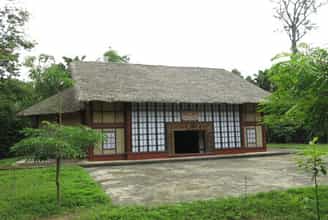
The Second National Congress Relic of the Party (Kim Binh Relic Area), includes 52 points, distributed in 4 communes: Kien Dai, Kim Binh, Vinh Quang, Linh Phu, Chiem Hoa district , Tuyen Quang province. The relic site of the Second National Congress of the Party is a place that marks many important historical events of the nation, such as: The National Congress unifying the Viet Minh Front and the Lien Viet Front into the Inter-Vietnamese Front. Vietnam, People's Alliance Conference of the three countries Vietnam - Cambodia - Laos, Nguyen Ai Quoc School (predecessor of the Ho Chi Minh National Academy of Politics) opens course III, Congress of Emulating Heroes, Soldiers and Cadres the first national model. 1. Relic site of the Party Central Committee and Government's working location, Kien Dai commune. Kien Dai commune is surrounded by a system of high hills and mountains (accounting for 3/4 of the area), the terrain is extremely dangerous, mobile, "convenient to advance, convenient to retreat", is the border area between Tuyen Quang and Bac Kan provinces. . Transportation is mainly by trails and railways (dating back to the French colonial period). Kien Dai base area is covered with a rich and diverse layer of vegetation, convenient for exploitation and construction of camps, houses, warehouses, trenches, and fortifications. Many high mountains surround villages and hamlets, forming a solid wall. There are many caves and caves in the mountain, very convenient for taking shelter when there is an alarm. The people here are mostly Tay and Dao ethnic people, with a spirit of patriotism and early revolutionary enlightenment. With a location that ensures safety, secrecy, and convenient transportation and communication, Kien Dai was the residence and working place of leaders and many central agencies during the period from 1948 - 1952. 2. Relic area of the Second National Congress of the Party, Kim Binh commune. At the end of 1950, after carefully studying the terrain of Kim Binh commune, the Party Central Committee decided to choose the Na Loang hill area, in Bo Cung village, as the place to hold the Party's Second National Congress. Na Loang Hill is located in the center of Bo Cung village, surrounded by many high mountain ranges, such as Pu Choong, Pu Mi, Pu Meo, Trai Face, Kham Khuat, forming a solid and convenient wall. to place observatories and air defense battlefields. The hill is bowl-shaped, the top is quite wide and flat, convenient for building houses and traveling. At the foot of the hill there is Co Linh stream flowing through, which is a source of water for the delegates' daily activities. From Na Loang hill, there are many convenient paths to areas in the Safety Zone. 3. Guard station to protect central agencies, Chinh street, Vinh Quang commune The guard station is a three-room dirt house built with wooden pillars, a roof thatched with palm leaves and double-woven bamboo walls, with one door and two windows. The house is about 3m long, about 2m wide, inside there is a set of tables and chairs to serve the security guard. Currently, only the site remains. 4. Location Na Ma, Pac Hop village, Linh Phu commune The small shack about 20m from the stilt house of Mr. Ha Van Hop's family, where President Ho Chi Minh and comrade Truong Chinh rest, is about 7m long and about 3m wide. The shack is made of bamboo, the roof is thatched with palm leaves, and the walls are double-woven bamboo. The stilt house of Mr. Ha Van Hop's family, where Comrade Pham Van Dong stayed overnight, is a stilt house with 3 rooms and 2 wings, made of wooden pillars, roofed with palm leaves, surrounded by double woven bamboo walls. , there are 2 stairs up and down. Currently, only the site remains. Artifacts of the Second National Congress of the Party relic site are kept at Tuyen Quang Provincial Museum (20 artifacts) such as: tables, chairs in the hall, storage boxes for construction, rice boxes serving the Congress, lunch boxes, and document boxes for delegates. At the Kien Dai Relic Area, there are artifacts: the desk and chair sets of comrade Truong Chinh and comrade Pham Van Dong... Ho Chi Minh National Academy of Politics still retains a number of artifacts such as: desks and chairs. , President Ho Chi Minh's working chair during the Congress... The Second National Congress of the Party took place from February 11 to 19, 1951, which was also the occasion for people of all ethnic groups in Kim Binh commune to organize the Long Tong festival. Therefore, the monument has a close connection with the festival. The relic site of the Second National Congress of the Party has great significance in the work of educating patriotic traditions and revolutionary heroism. With typical special values, the historical relic site of the Party's 2nd National Congress (Chiem Hoa district, Tuyen Quang province) was ranked by the Prime Minister as a Special National Monument. farewell on December 22, 2016). Source: Tuyen Quang province electronic information portal
Tuyen Quang
8802 view
Rating : Special national monument
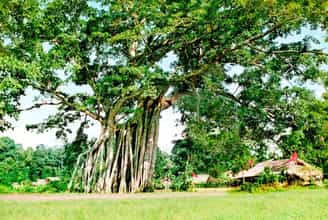
Tan Trao Banyan Tree
Tan Trao banyan tree relic in Tan Lap village, Tan Trao commune, Son Duong district, Tuyen Quang province. Tan Trao banyan tree is a historical symbol of Tan Lap village, where important events took place during the resistance war against the French of the Vietnamese people. This banyan tree is not only the protector of the people here but also a living witness to the heroic days of Tan Trao's army and people. Under the Tan Trao banyan tree, on the afternoon of August 16, 1945, General Vo Nguyen Giap read the Military Order No. witnessed by all Viet Bac ethnic people and 60 national delegates. From then until now, Tan Trao banyan tree has become a revolutionary symbol of the Capital of Tuyen Quang Liberation Zone. The Tan Trao banyan tree has two towering branches that people call the banyan tree and the banyan tree. Both trees are located 10mm apart and have very lush branches and leaves. Through many historical events, the banyan tree gradually ages and weakens. In 1993, due to the impact of a storm, the "banyan tree" fell, leaving only a small branch. The "banana tree" cannot avoid the law of "birth and death", gradually showing bad signs, the leaves turn yellow, and some tops die. By 2008, the Tan Trao banyan tree had only one left branch facing the Northeast of the "banana tree" that was still alive but was not growing well, the main root of the tree was almost dead. Faced with that urgent situation, the local government has coordinated with organizations and businesses to come up with plans to care and revive the Tan Trao banyan tree. With much effort, after 2 years the Tan Trao banyan tree has gradually recovered, more young shoots have appeared, signaling that life will flourish strongly. And to this day, the "banyan tree" has developed into 2 root clusters consisting of 38 large and small roots, with a wide canopy that radiates cool green shade. The small branch of the "banyan tree" has also recovered and grown into a lush new cluster of trees. Tan Trao banyan tree relic is located in the Tan Trao special national relic area of Tuyen Quang province. Source: Tuyen Quang Tourism
Tuyen Quang
8393 view
Rating : Special national monument
Nearby tourist attractions
See all
Lung Cu Flagpole
As a symbol marking the northernmost point of Vietnam, the Lung Cu flagpole was built on top of Dragon Mountain, in a small commune in Dong Van district, Ha Giang province. Located at an altitude of 1,470m above sea level, this is one of the check-in locations for many young people, and is also the conquering point for almost all tourists coming to Ha Giang. To get to Lung Cu flagpole, you also need to arrange a trip to Ha Giang, and need to have a specific, early schedule to visit this place because the flagpole is quite far from the mountain road, nearly 200km. If you want to travel to Ha Giang and see the beautiful scenery here, some of the most appropriate times you should consider are: From January to March: Around this time, plum blossoms, peach blossoms, and yellow mustard flowers will bloom. You will admire the nickname "blossoming rock area", so come here at this time. You will be able to visit and enjoy the beautiful scenes of flowers blooming. You can also come in May during the flood season or June - August during the summer with dry weather, easier to move and more convenient for visiting Lung Cu flagpole. Or you can also go to Ha Giang in October - December to visit the flagpole. This is also the time when buckwheat flowers bloom on the Dong Van stone plateau, you will see the most wonderful scenery in the spring. this time. The first thing when you want to visit Lung Cu Ha Giang flagpole is to have a plane ticket to Hanoi. After arriving in Hanoi, what you need to do next is find a bus to Ha Giang city of Ha Giang province. From here you can also rent a motorbike or car to get to Lung. Owl. If you are in the Northern provinces, you can choose to take a passenger bus, motorbike or car to get to Lung Cu flagpole along Highway 4C to Quan Ba, then from here you will go to Dong Van. . If you have arrived in Dong Van, go straight and you will reach Sa Phin commune. If you keep going, you will come to a fork. If you go straight, you will reach Dong Van old town, if you do the opposite, you will head towards Lung Cu. Built on the top of Dragon Mountain, to reach the top of the mountain you need to go through 839 steps, divided into 3 stages, at each stage there will be a waiting area for visitors to rest or admire the scenery below the mountain. After climbing more than 800 steps, you will definitely be stunned and proud when witnessing the Lung Cu flagpole with an octagonal architecture, 33.15m high and the 54m2 national flag always flying. on top of Dragon Mountain. Around the body of the flagpole is the face of a Dong Son bronze drum and at the foot of the flagpole are eight bas-reliefs illustrating the glorious historical periods of the country. Looking down from the flagpole, you will feel like you are seeing the land of our country in your eyes. Feel the cold air of the Northeast mountains and forests. Standing at Dragon Mountain, it feels like the Northeast mountains and forests blend with the high and wide sky. Not only that, just by looking up, the image of national pride is enhanced with the bright colors of the sacred national flag. the spirit flies. It creates a feeling of pride and excitement when conquering the pinnacle of a big milestone.
Tuyen Quang
8880 view
From January to December
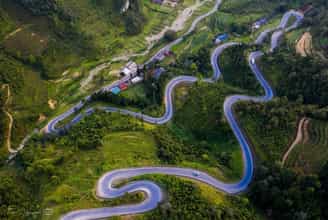
Ma Pi Leng
Ma Pi Leng Pass in Ha Giang is also known as Ma Pi Leng or Ma Pi Leng, meaning "horse's nose". Ma Pi Leng is known as one of the death passes of the Northern mountains, because of its dangerous curves that challenge the driver. The pass is located on Highway 4C, Pa Vi and Pai Lung communes, Meo Vac district, Ha Giang province, one of the highest and most dangerous slopes in the Northeast mountains, and is also on the list of "four great mountain passes". "pass peak" of Vietnam is worth conquering. Located at an altitude of about 1,200m above sea level, and about 20km long (connecting Dong Van ancient town and Meo Vac town), Ma Pi Leng curves and wraps around the mountain like a white python. Following this road, you will pass through many villages or famous places such as Pa Vi, Sin Cai... Ha Giang is beautiful all year round. Each season has its own identity. Just like perfume, there is no scent that is the most fragrant, there is only the most suitable scent. And MIA.vn has created a list of some of Ha Giang's highlights each month for you. January-March is plum and peach blossom season. If you love the pink color of this flower, definitely don't miss it. April is the time when Khau Vai love market takes place. The unique market is only held once a year, so if you are interested in this festival, you should come to Ha Giang in April. September is the season when the terraced fields in Ha Giang are dyed a picturesque golden color of ripe rice. October and November buckwheat flower season - A romantic flower only present in the Northeast. December is mustard flower season, and if the temperature is low enough, there will even be snow. I bet that whether you are a backpacker or not, you have heard of the reputation of this Ma Pi Leng pass. This is one of the "four great passes" with beauty that is both wild and dangerous but strangely charming and attractive. Ma Pi Leng is difficult to conquer. Therefore, it makes people yearn even more to be able to overcome all the zigzag and winding roads surrounded by high, steep rocky mountains and deep abysses. Located precariously in the middle of a mountain, you will also go through 9 "scary" winding turns when one side of the steering wheel will be a deep abyss. The road is narrow, sometimes only enough room for one car. Yet on the way you can also see the green Nho Que river winding like a strip of silk. The river's seasonal changes are extremely special. This is also a legendary check-in corner for adventurous young people. In addition, you can also go to the cliff located between the cliffs - Where you will capture the entire panorama of majestic mountains and forests and immense rivers. On the way to the top of Ma Pi Leng, there will also be terraced fields in the ripe rice season that will become golden, covering the entire mountainous region of the Northeast. In addition, depending on the season, the space below will be the pure white of mustard flowers, plum flowers or the striking red of other flowers. Northeast cuisine has a strange and special appeal. Dishes such as thang co, buffalo meat, sausage... are all specialties that tourists should not miss when traveling to Ha Giang. Also, have you heard of grilled moss? The flavor of this dish is 1-0-2, after eating it, you will definitely be addicted. Mostly because of the cold weather, the dishes in Ha Giang are also grilled dishes and sipping a little wine to fully experience the dining culture of this top land of the country.
Tuyen Quang
8469 view
From January to December

Dong Van ancient town
Dong Van town is nestled between the four cloud-covered mountains of the rocky plateau. There are only a few dozen houses scattered around the central area and interspersed with cliffs standing in the middle of the blue sky. The beauty of Dong Van ancient town emerges as a lyrical water painting with all the colors of nature converging. Ancient houses were built by local people next to the cliffs as a test of human strength and determination before creation. Dong Van Old Quarter was formed in the early years of the 20th century. Through historical changes and ups and downs, the neighborhood still retains the charm and wilderness of the beginning. The street was built by Tay people, Mong people and Chinese people. Nowadays, when traveling to Ha Giang, it will not be difficult for you to see images of houses designed in the style of long houses and yin-yang tiled roofs. Over time, Dong Van old town welcomed many different residents to live and do business. This has caused the neighborhood to harmonize, synthesize and adapt many cultural forms of different ethnicities. Coming to Dong Van ancient town, you can not only see lanterns strung like looms on the streets, but also witness highland markets with the sounds of trumpets, music and typical products of the region. rock Hight Hill. On weekend nights, the space in the markets becomes bustling with the singing and singing of couples. They exchange dances and love songs by the flickering firelight of the highland love market. Dong Van Ancient Town is not only a trading address for people in the region but it has become a "commercial center" of a large plateau region. Not only local people and people in neighboring areas, but even those who do business in the lowlands want to come here to buy and sell products. Traveling to Ha Giang to Dong Van ancient town is also the address for organizing traditional festivals of the Tay, Mong and ethnic minorities in the Northwest mountains. In traditional costumes, young women of the Mong, Tay, Pu Peo, Lo Lo... hold hands with the music of love exchange. The highlight of the old town is Dong Van market, the market was built with mainly stone materials since 1920. After nearly a century, the market still preserves its cultural features quite intact. To see Dong Van old town from above, you can completely see the entire scene of the neighborhood in your sight. Rows of houses are arranged in a U shape with yin and yang tiles along the mountainside. If you ask, which season is the most beautiful to travel to Ha Giang? Then come to Ha Giang during the buckwheat flower season, you can completely immerse yourself in the space of mountains and forests and monochrome white hillsides, along with the fragrant scent of this famous flower in the Northwest. In Dong Van old town, at night, you can stop by a cafe to enjoy the delicious taste of coffee and listen to the sound of the wind echoing on the hillsides. The scent of the buckwheat flower will lull you into the enchantment of the flute, the flute and the flickering flames of melodious music. In general, Dong Van ancient town has quite common Chinese-style architecture, mainly covered with yin and yang tiles, and the trusses are firmly designed. In particular, stone seems to be the main material and has become popular in construction. Stone mortars, stone walls, and stone pillars were invested in building the landscape space of the streets very close to nature, less affected by human hands. Almost every house in the old town has lanterns hanging. Perhaps this is a unique cultural feature of the minority people and the image of the fire also helps dispel the coldness of the rocky plateau at night. . According to Ha Giang tourism experience, every year, Ha Giang province organizes many festivals imbued with the traditions of ethnic minorities in Dong Van, including "Old Town Night". Coming to the old town night, you will have the opportunity to see brocade dresses, lanterns, and traditional dishes of ethnic minorities. Ha Giang, an impressive tourist land with many cultural and historical addresses still quite intact. Coming here is also coming to a land of lyrical sky, clouds, water, everything is very wild. The land of buckwheat flower fields, Thang Co dishes, hand-burning brocade and the sound of flutes of couples exchanging love on the old town of Dong Van - the stone plateau.
Tuyen Quang
8877 view
From January to December

Pho Bang town - Yen Minh
Dong Van has long become an extremely attractive and famous tourist destination for domestic and foreign tourists as it possesses countless beautiful landscapes and, more specifically, the Lung Cu flagpole, a symbol very sacred of Vietnam. But that's not all of Dong Van. Hidden deep in the layers of rock and soil, there is a small town called Pho Bang. This is a little-known land. Even though it has been forgotten over the years, it still retains its wild, ancient and strangely peaceful features. In the past, when mentioning Pho Bang, people often immediately thought of the busiest marijuana and drug trading center in Ha Giang, but after being cleared, this place retreated and had an almost closed life with others. the outside world. Due to its geographical location, hidden deep in the rock layer, the road to Pho Bang is quite difficult and dangerous. We can start from Dong Van old town and go back about 17 km. With dangerous and precarious mountain passes where one side is a deep abyss and the other is a high mountain, you should firmly hold the steering wheel and pay attention to the signs and convex mirrors mounted on both sides of the road. If you do not have any experience with mountain pass travel, a class for backpackers is probably the most appropriate choice that you must prepare before leaving. Although the road is difficult, visitors should not be too worried or afraid because on the way you will admire the beautiful scenery of majestic mountains unique to Ha Giang or just consider this a challenge. you set for yourself to reach higher limits in life. After a long journey, Pho Bang town opens before our eyes a scene as if we were lost in the countryside of the distant country of Korea. Originally known as the young woman sleeping on the Dong Van stone plateau, when entering Pho Bang you will feel a peaceful scene with a gentle and serene pace of life. The houses have yin-yang roofs with ancient moss-colored roofs and ivory-yellow earth walls mixed with reddish brown. The window frame is old, the wall has cracks that seem to be about to collapse, but it is extremely sturdy against the storms of Ha Giang. Hanging on it are red couplets and a lantern with engraved words of Ha Giang. The Chinese ethnic people have become discolored over the years. Things that were seemingly unusable for a long time, now under the talented hands of the ethnic people living in this land, have created a rare, ancient and wild beauty in the Northwest high mountains. Each of the four seasons has its own unique beauty, but perhaps autumn is the season when this place is the most beautiful and perfect. When autumn comes, the town takes on a desolate beauty tinged with memories, but hidden deep inside is full and intense vitality. Enjoying the fresh air in a peaceful land, admiring the passionate buckwheat flower hills, wandering around the roadside of a small town with a camera in hand, you will definitely have great experiences. What a wonderful moment in this sleepy land. Not only does beauty move people's hearts, Pho Bang town also leaves an extremely deep mark in the hearts of visitors because of the simplicity and simplicity of the people here. Living in Pho Bang are mainly ethnic Chinese and Mong people. Coming here, you will definitely not be able to hold back when you see the bright eyes of ethnic people. They are people who, despite living in poverty and darkness, are never corrupted or corrupted by money and urban luxury, but live slowly, leisurely and diligently. Day after day, no matter how the world and people change, the lifestyle of ethnic people still follows a certain trajectory. Young men still carry baskets to work in the fields, and women diligently carry their children on their backs without forgetting their work. Occasionally we see small children with dirty clothes but their eyes radiate clarity, wild innocence and full of life like buckwheat flowers growing on dry, rocky mountain slopes. With a pristine, ancient scenery that few people know about, an ethnic group with a simple and elegant lifestyle have all created the peaceful small town of Pho Bang. Although not as famous as other places in Dong Van, this place has retained its long-standing traditional cultural features. That is an extremely precious gift that the people of Pho Bang have preserved for Ha Giang in particular and Vietnam in general. That's why let's join hands to protect a beauty that is gradually fading over the years.
Tuyen Quang
8690 view
From January to December

Yen Minh pine forest
Yen Minh is a town about 100km northeast of Ha Giang city, along Highway 4C from Can Ty to the district town center running through 3 communes: Bach Dich, Na Khe, Lao and Chai. Yen Minh Road extends 50km from Quan Ba, both sides of the road grow straight, stretching for dozens of kilometers, welcoming backpackers with winding, winding roads and mist in the distance. The sky-high scenery of Yen Minh pine forest, the green grasslands, the romantic mist and the cool atmosphere make visitors feel like their soul is at ease, their spirit is at ease, as if they were entering a "Da Lat". Second lat". Walking in the middle of the pine forest, listening to the whispering sounds, humming a few songs makes people love life more, relax and blend in with nature, enjoying the feeling of being in a peaceful green paradise on earth. Looking at the Yen Minh pine forest from above, you feel like you have just walked on a wave with soft, winding curves. In particular, next to the high mountains, there are rivers stretching upstream. The harmonious combination of rivers, mountains, clouds and sky will help you have more fascinating experiences and feel the special lyrical beauty of this land. According to Ha Giang travel experience, down the delta, about 12 hours from the center of Yen Minh district, there is also a green steppe in Lao Va Chai. This place has a romantic beauty, a stopover on the road to Yen Minh pine forest, and for that reason, this lovely, poetic steppe has become an ideal wedding photography location for many couples. pair. As a tourist destination in Ha Giang that is both unique like the scenery of Da Lat and at the same time poetic, peaceful and gentle to the point of nausea, Yen Minh pine forest will be an unforgettable experience for every visitor.
Tuyen Quang
8378 view
From January to December
 AI Travelviet