
 vn
vn en
en ja
ja ko
ko zh
zh


Uncover Thái Nguyên: 20+ Absolutely Stunning and Captivating Attractions for Travelers

Thái Nguyên is a truly bountiful region, blessed with breathtaking landscapes and stunning natural beauty – an unmissable destination for any traveler. So, to help you plan your visit, here’s a look at some of Thái Nguyên’s most distinctive and incredibly popular attractions, guaranteed to captivate visitors.
Discover Thai Nguyen – a paradise of stunning attractions in Vietnam! On your trip, don't forget to addthis list of 20+ popular and exciting tourist spots in Thai Nguyenthat63 Stravelis about to share in the article below.
Top 20+ Unique and Instagram-Worthy Tourist Attractions in Thai Nguyen
If you're visiting Thai Nguyen and wondering where to go, save this list of 20+ incredibly beautiful tourist spots.
Tan Cuong Tea Hill
When talking about Thai Nguyen's specialties, the distinctive flavor of its tea is always at the top of the list. This northeastern region of Vietnam is a renowned source of delicious tea, where locals are deeply connected to the lush green fields and their delicate aroma. Any journey to experience the local culture and daily life of the indigenous people must include a visit toTan Cuong tea hill. Located about 10km from the city center, it's a must-visit on your Thai Nguyen travel itinerary.
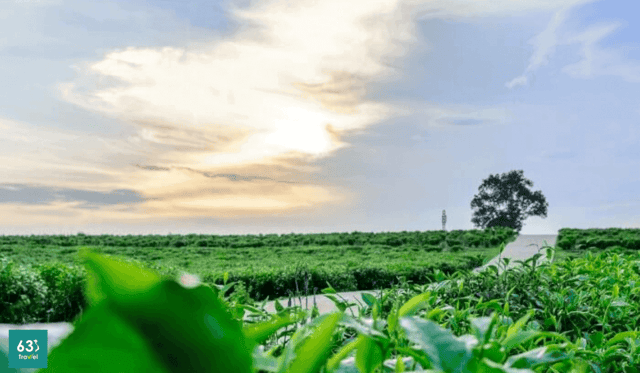
Tan Cuong Tea Hill – An Ideal Destination for Your Thai Nguyen Trip
Tan Cuong Tea Hill is a beautiful landscape of sprawling green carpets, enveloped in a cool atmosphere with the gentle fragrance of young tea leaves. Here, you can admire the vast expanse of tea plantations, covering over 1,300 hectares, and breathe in the fresh air of the high mountains.
What's more, you'll have the chance to join locals in harvesting tea and savor a fragrant cup amidst the peaceful ambiance of the tea hills. With its stunning natural beauty and fresh air, Tan Cuong Tea Hill is not only a popular tourist attraction but also a place to experience the simple and tranquil life of the local people.
Wonderland Film Studio
Located opposite the Tan Cuong Tea cultural area, along the winding Cong River, Wonderland Film Studio is a unique destination where visitors can not only admire but also immerse themselves in the magical natural surroundings. With a delicate blend of natural and man-made elements, Wonderland is not just a place for entertainment and photography, but also for those seeking tranquility and peace.

Wonderland Film Studio Thai Nguyen – A Picture-Perfect Spot as Beautiful as South Korea
Here, you can rent pre-arranged tents or set up your own camp to enjoy an outdoor experience with your family. Wonderland Film Studio is an excellent destination for anyone looking to explore Thai Nguyen in a comprehensive and multifaceted way.
Duom Temple
At the foot of Duom Mountain (Dong Dat Commune, Phu Luong District, Thai Nguyen Province) stands a temple dedicated to Prince Consort Duong Tu Minh – a heroic figure in the nation's history. Every year on the 6th day of the first lunar month, the festival at Duom Temple attracts numerous visitors who come to explore and learn about the long-standing cultural heritage of the Vietnamese people.
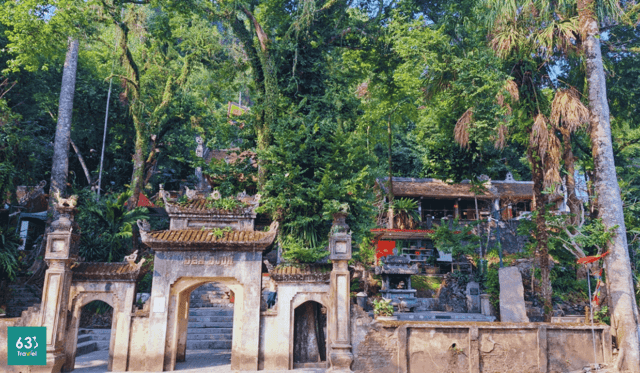
Duom Temple and the Legend of the Talented General of the Ly Dynasty
This temple is not only a historical relic from the Ly Dynasty but also a symbol of the people's steadfast traditional spirit and loyalty. With its ancient architecture, weathered by time, and the majestic natural beauty surrounding it,Duom Templeis a wonderful destination for history and nature lovers.
Phoenix Cave - Mo Ga Stream
On your journey to explore Thai Nguyen, you cannot miss the opportunity to visitPhoenix Caveand Mo Ga Stream – two captivating destinations for lovers of majestic nature. Phoenix Cave and Mo Ga Stream offer a perfect combination of cave exploration and natural ecosystems, providing a unique and exciting experience for visitors.
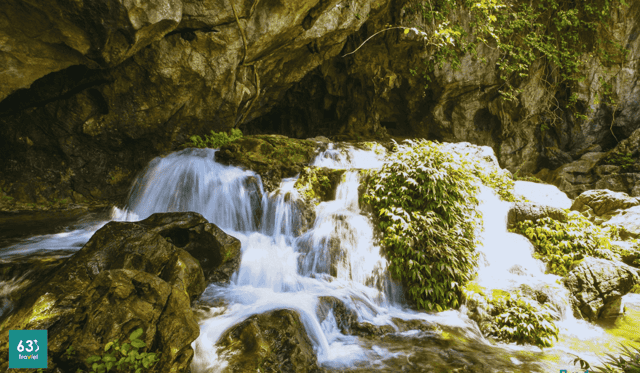
Phoenix Cave and Mo Ga Stream are likened to the fairy of Thai Nguyen
Located along National Highway 1B in Vo Nhai District, about 45km from Thai Nguyen city, Phoenix Cave is a mysterious natural cave. With three levels: Bat Cave, Bright Cave, and Dark Cave, it offers a cool, fresh atmosphere with crystal-clear water and fine white sandbanks. The unique natural stalactites and stalagmites are particularly striking, creating an impressive experience for visitors.
About 100m from the cave is Mo Ga Stream, a clear stream that flows powerfully, creating small waterfalls with white foam. This is an ideal destination for outdoor activities, swimming in the stream, and relaxing amidst the cool and peaceful natural surroundings.
Nam Rut Waterfall
Also known as Raindrop Waterfall, Nam Rut Waterfall is about 35km from the city center and is a must-visit on your Thai Nguyen exploration! At Raindrop Waterfall, visitors will be immersed in the sound of trickling water, the echoing resonance of the rock faces, combined with the rhythmic flow of water, creating a unique natural symphony that captivates the heart. The fresh, clean air here is a crucial element contributing to the magical and pristine landscape of the waterfall.
During the rainy season, you'll witness powerful white cascades, creating a uniquely majestic scene rarely found elsewhere. Conversely, in the dry season, you'll discover vibrant green moss patches on the rock faces, forming a fascinating shimmering green tableau.
Away from the bustling city life,Nam Rut Waterfallis one of Thai Nguyen's ecological tourist attractions that draws a large number of visitors each year. Known as Raindrop Waterfall, this spot boasts majestic beauty with its frothy white water, creating the sensation of light rain falling from above.
Dat Dang Waterfall
Approximately 45km from Thai Nguyen city center, Dat Dang Waterfall is an unmissable destination on your journey to explore Thai Nguyen. Standing out with its natural beauty, stretching like a watercolor painting, Dat Dang Waterfall offers visitors a wonderful experience amidst the surrounding lush green forest.
Visiting Dat Dang Waterfall during your Thai Nguyen trip feels like an adventure into a new, exotic land, where you can escape the hustle and bustle of urban life. The majestic mountain scenery and cool, clear water create an irresistible relaxing and peaceful atmosphere for visitors.
Moments spent at Dat Dang Waterfall offer an opportunity to enjoy serenity and find inner peace. This is the ideal place to relax and immerse yourself in this rare natural beauty, providing you with memorable and emotionally rich experiences.
Vai Mieu Lake
Nestled at the foot of the Tam Dao mountain range, Vai Mieu Lake emerges as a stunning, captivating watercolor masterpiece with majestic mountain scenery. The vast lake surface and crystal-clear water, combined with the magnificent surrounding landscape, create a poetic and alluring picture. The wild and romantic charm of Vai Mieu Lake has been perfectly preserved, enchanting hearts with its pure natural beauty.
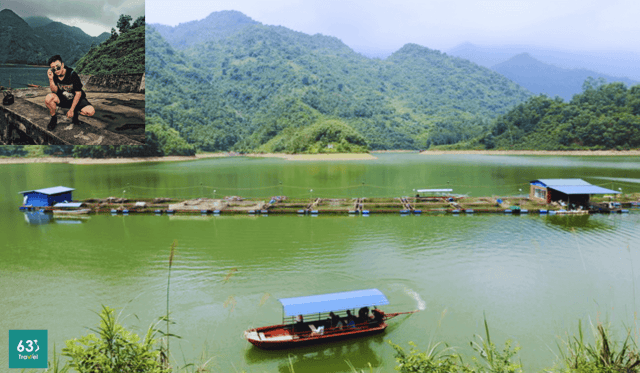
Vai Mieu Lake Thai Nguyen – A New Destination with Poetic and Wild Beauty
Upon arriving at Vai Mieu Lake, you'll immerse yourself in a peaceful atmosphere, admiring the wild and majestic nature from a boat on the vast lake. This place is also home to delicious local specialties like grilled fish, tea, sugarcane, and more, which you shouldn't miss.
Suoi Lanh Lake
Suoi Lanh Lake, a natural gem spanning up to 50 hectares, attracts visitors with its wonderful combination of clear streams and majestic mountain forest scenery. Around the lake are refreshing rows of trees, creating layers of shade, providing a cool and pleasant atmosphere.
Upon arriving at Suoi Lanh Lake during your Thai Nguyen exploration, visitors will be captivated by the beauty of the vast nature, breathe in the fresh air, and relax, enjoying a feeling of ultimate comfort. Moreover, you can participate in stream bathing, immersing yourself in the majestic wilderness of the mountains, creating an unforgettable and exciting experience.
Ghenh Che Lake
Ghenh Che Lake resembles a vast emerald gem, covering up to 40 hectares, surrounded by winding eucalyptus forests. With its majestic beauty and fresh air, Ghenh Che Lake attracts numerous visitors who come to relax and enjoy life by the lakeside.
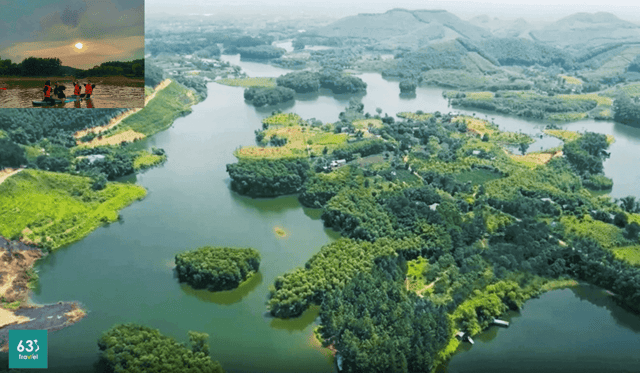
Ghenh Che Lake: A Picturesque Beauty That Captivates Visitors
Here, visitors will be enchanted by the fresh natural scenery, the echoing birdsong, and the vast, tranquil waters. Immersing yourself in the peaceful ambiance of Ghenh Che Lake will undoubtedly leave lasting memories for travelers.
Ba Van Horse Farm
Located just 12km from Thai Nguyen city center, on the road leading to Ghenh Che Lake, you'll find Ba Van Horse Farm. This is currently the largest center for researching, developing, and breeding horses in Vietnam.
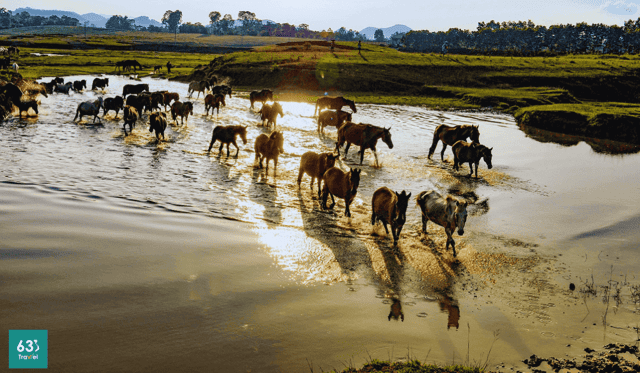
Visit Thai Nguyen to Experience Horse Riding on Green Grasslands
At Ba Van Horse Farm, visitors can discover and interact with strong, sleek-haired horses. You can touch, observe, and even ride these magnificent horses. This will be a truly exciting experience, especially for children.
Feeling as if you've stepped into a distant Mongolian steppe, the scenery at Ba Van Horse Farm is not just a vivid picture but also an opportunity for visitors to explore and experience a unique part of Vietnam's equestrian culture.
Museum of Cultures of Vietnam's Ethnic Groups
Museum of Cultures of Vietnam's Ethnic Groupslocated on the poetic riverbank of Thai Nguyen province, is a large-scale cultural institution with stunning architecture that has captivated many visitors. In 1996, the museum was honored with the Ho Chi Minh Award for Culture and Arts, demonstrating its cultural appeal and value. Today, it is an attractive tourist destination, preserving over 3,000 documents on the traditional cultural features of the 54 ethnic groups living in Vietnam.
As one of Vietnam's five National Museums, the Museum of Cultures of Vietnam's Ethnic Groups houses over 40,000 original documents and artifacts on the traditional cultures of Vietnam's 54 ethnic groups. The museum features both indoor and outdoor exhibits, allowing visitors to admire everything from costumes, production methods, and daily life to cultural and artistic activities. Notably, the museum has organized "dynamic" experiential activities about ethnic cultures, suitable for groups with specific needs and advance bookings.
Hang Pagoda - Kim Tu Son
Hang Pagoda, located about 2km from Thai Nguyen City center in Hang Pagoda town, is one of the famous spiritual tourist destinations attracting visitors from all over the country. Here, tourists come not only to offer incense but also to admire the sacred and exquisite beauty of Buddhist architecture.
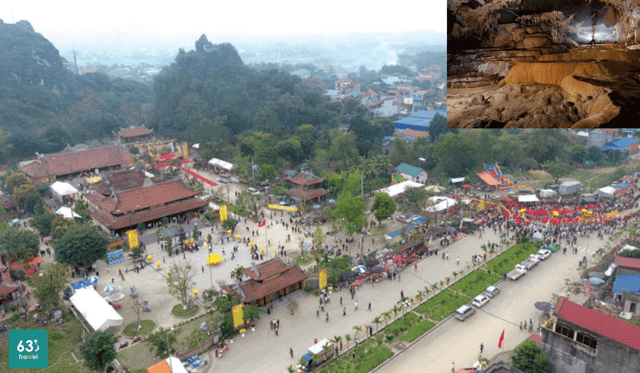
Enjoying the Scenic Beauty of Hang Pagoda, Thai Nguyen
Hang Pagoda is associated with three large rocky mountains: Huyen Vu, Thanh Long, and Bach Ho, creating a stunning and majestic natural landscape. With a saddle-like ridge connecting the three mountains, the scenery here becomes picturesque and romantic. Visitors have the opportunity to explore and take photos, preserving beautiful moments at this location.
ATK Resistance Zone
travelDinh Hoa, located on De Pass in Phu Dinh Commune, Dinh Hoa District, bordering Tuyen Quang, is a historically significant site honored to commemorate President Ho Chi Minh and the nation's brave heroes. This was not only the central base of Viet Bac during wartime but also a symbol of the Vietnamese people's steadfastness and determination in their resistance against French colonialism to regain national independence and freedom.
Upon visiting ATK, tourists can not only delve into its glorious history but also experience a solemn atmosphere, especially for those who admire and revere the heroes who sacrificed for the country's independence and freedom.
Thai Hai Stilt House Village Conservation Area
The Thai Hai Stilt House Village Conservation Area emerges as a precious gem amidst the beautiful and poetic land of Thai Nguyen. It is not only a famous tourist destination but also a place for preserving and developing the traditional culture of the Tay and Nung ethnic groups.
Upon entering the conservation area, visitors will be captivated by the beauty of 30 stilt houses, large and small, each reflecting the traditional beauty and depth of ethnic culture. Each house tells a story, a memoir of life and unique cultural traditions.
Here, visitors are not just observers but can also participate in the vibrant cultural activities of the local people. From folk art performances to special events like festivals and community gatherings, every experience here is a meaningful journey of discovery and celebration of ethnic culture. The Thai Hai Stilt House Village Conservation Area is not just a tourist destination but also a vivid experience of the culture and life of ethnic minorities, leaving a strong impression of the cohesion and prosperity of the Thai Nguyen region.
Dum Mountain
Dum Mountain, once known as Diem Mountain, is renowned as one of the most famous tourist paradises in the area, holding beautiful and mysterious stories within. The beauty of Dum Mountain is not just its mystique but also the freshness and splendor of nature.
Morning light filters through large ancient trees, creating soft shadows that make the surrounding air sweet and pleasant. As visitors step onto the path up the mountain, they will be captivated by the wild and peaceful beauty of the lush green space, where birdsong echoes and the scent of flowers permeates the air.
Linh Son Cave
Linh Son Cave lies quietly within Hot Mountain – a large limestone mountain far from villages and residential areas. With its uniquely beautiful scenery, Linh Son Cave attracts numerous visitors each year. It is famous for its distinctive stalactites and stalagmites that combine to create a magnificent natural tableau.
Linh Son Cave consists of two natural rock chambers: Dia Cave (Earth Cave) and Thien Cave (Heaven Cave). In the past, it also served as a camp and defensive position for the Thai Nguyen provincial army during the resistance war. Today, it is not only a tourist attraction but also an important spiritual site where people offer incense and worship Buddha on the full moon and first day of each lunar month.
With its vast area, Linh Son Cave offers a cool space in summer and a warm one in winter. Whenever visitors come here, they can not only admire the mysteries of nature but also enjoy the fresh and peaceful atmosphere amidst the majestic beauty of the natural world.
Cua Tu Stream
Cua Tu Stream has long been familiar to local residents and visitors to Thai Nguyen. Although known for a long time, this place has retained its pristine and natural beauty throughout the years. It is truly a famous tourist spot, an ideal place for those who love trekking.
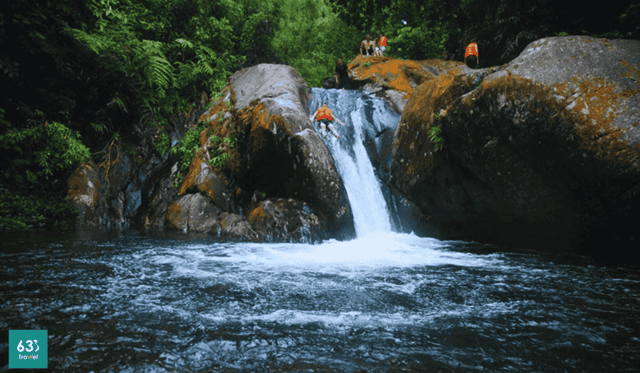
Conquering Cua Tu Stream and an Exciting Trekking Journey
About 15km from Hung Son town, Dai Tu, Cua Tu Stream maintains a wild beauty amidst the mountain range. The small stream flows between two towering rock faces, creating beautiful but challenging 'death gates'. Overcoming these 'death gates' to reach the source of the stream and enjoying a dip in the clear, cool water will undoubtedly be the greatest joy for every visitor.
Nui Coc Lake
travel– a beautiful gem likened to a miniature 'Ha Long Bay' of Thai Nguyen, is an unmissable destination for those who love grandeur and adventure. Located 16km from Thai Nguyen city center, Nui Coc Lake attracts visitors with its majestic natural beauty and exciting entertainment games.
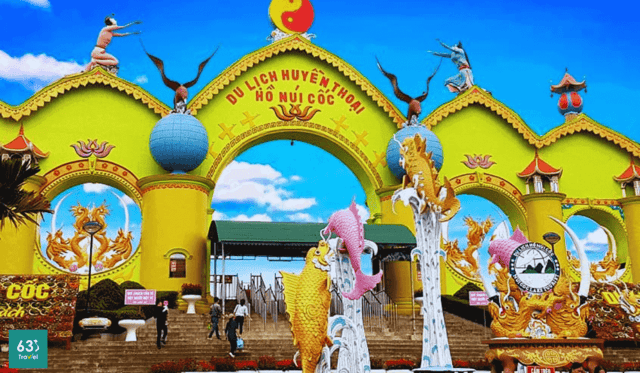
Conquer Nui Coc Lake Tourist Area in Thai Nguyen
This is not only a place to admire the picturesque landscape but also an ideal destination for thrilling games like roller coasters, rockets, flying saucers, and many other attractions. Nui Coc Lake is divided into two parts: the North Lake with modern, diverse entertainment spaces, and the South Lake, which retains its pristine, pure beauty, making it an ideal place to relax and enjoy a weekend with friends.
Non Nuoc Pagoda
Non Nuoc Pagoda is a unique historical and spiritual relic in Thai Nguyen, not only an attractive destination for culture and history enthusiasts but also a place where the legend of Saint Giong is vividly re-enacted.
This pagoda was built to commemorate and worship Saint Giong – a legendary national hero. According to legend, after defeating the enemy, Saint Giong stopped in this area and bathed in West Lake. His actions left a deep impression on the local people, and since then, Non Nuoc Pagoda was built to acknowledge and remember this event.
Phu Lien Pagoda
Phu Lien Pagoda is an ancient and majestic pagoda in Thai Nguyen City, renowned for its historical architectural beauty and profound spirituality. Despite undergoing numerous renovations, the pagoda has retained its venerable charm and become a symbol of Dai Viet pagoda architecture.
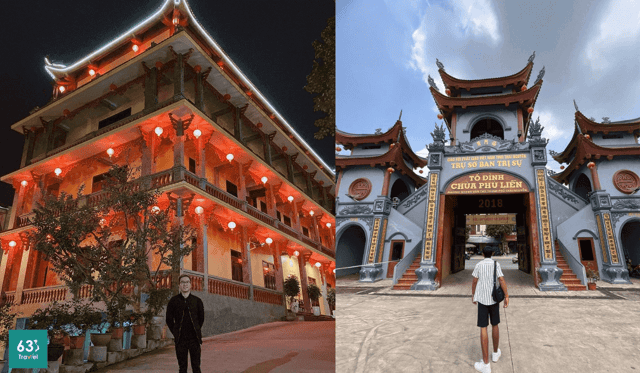
Phu Lien Pagoda – A Spiritual Temple Steeped in National Spirit
Phu Lien Pagoda comprises many unique architectural structures such as the Dien house, Tam Bao house, ancestral shrine, and an ancient stupa garden. Visitors to the pagoda have the opportunity to appreciate the full beauty and essence of this complex. Especially, if you visit during festivals, you will experience the sacred and vibrant atmosphere of the place.
With this list of20+ impressive tourist attractions in Thai Nguyenabove, we hope you'll have a complete and joyful discovery trip. If you're planning a trip to Thai Nguyen and are still wondering about destinations, check out our article on63Stravel.com!
Thai Nguyen 8683 view
Update day : 21/06/2024



Monuments close by
See all
Historical relics safety zone (ATK) Cho Don
Cho Don Safety Zone (ATK) relic area, located in 3 communes: Binh Trung, Nghia Ta, Luong Bang, Cho Don district, Bac Kan province. Cho Don ATK belongs to the Viet Bac War Zone relic complex (including Dinh Hoa ATK, Thai Nguyen province and Tan Trao ATK, Tuyen Quang province), which is the residence and working place of President Ho Chi Minh and his fellow leaders. Central Government during the resistance war against the French (1946 - 1954). ATK Cho Don relic is a strategic base, witnessing and marking many important historical events in the period before the August Revolution of 1945 and the resistance war against the French colonialists (1946 - 1954); associated with the revolutionary cause of President Ho Chi Minh and comrades: Pham Van Dong, Vo Nguyen Giap, Truong Chinh, Hoang Van Thai, Nguyen Chi Thanh, Tran Dang Ninh... Here, President Ho Chi Minh, Trung The Party Central Committee and the Government have planned the resistance path, made strategic decisions, and decided the country's destiny in a historical period of arduous struggle, leading the entire people from victory to victory. one victory after another. Located in 3 communes in the south of Cho Don district, where the terrain is rugged and mountainous, with an average altitude of 600m, the system of rivers, streams, streams and canals is quite dense, the largest being Pho Day river, ATK area. Cho Don, includes 25 relics, including: 6 relics have been ranked at national level, 3 relics have been ranked at provincial level, 16 relics are included in the inventory list. 1. Pu Co Hill Relics (Ban Bang village, Nghia Ta commune - Where the two armies advancing from the South and the North met in October 1943) 2. Relics of Comrade Vo Nguyen Giap's Shack (Ban Bang village, Nghia Ta commune - Comrade Vo Nguyen Giap's residence and revolutionary activities, after the road to the South was opened in 1943). 3. Khuoi Khit relic (Na Ca village, Nghia Ta commune - where an exhibition praising the Allied forces before 1945 was held). 4. Relics of Mr. Trieu Phu Duong's House (Ban Bang village, Nghia Ta commune - Where the leaders of the Viet Minh Front met during the pre-uprising period of 1945). 5. Na Pay relic (Na Kien village, Nghia Ta commune - Where Uncle Ho stopped to rest on the way from Pac Bo (Cao Bang) to Tan Trao (Tuyen Quang) on May 17, 18, and 19, 1945. 6. L-star L-so do relic (Khe Nua) (Ban Bang village, Nghia Ta commune - Where Viet Minh forces set up a base to repair and make rudimentary weapons to directly serve the two Northern armies advance, advance South, 1943 - 1945). 7. Ban Ca relic (Ban Ca village, Binh Trung commune - Uncle Ho's living and working place in December 1947) 8. Na Kien relic (Na Kien village, Nghia Ta commune - Place of the Closing Ceremony of Course 2 and 3 of Tran Quoc Tuan Military School on October 28, 1947. 9. Khuoi Dam relic (Na Khan village, Nghia Ta commune - The living and working place of Truth Newspaper from 1948 to 1953), located in a small valley, at the intersection of two small streams, surrounding are high hills and mountains, densely wooded, within the protection zone zone II, divided into 3 areas: 10. Ban Tang Hill Relic (Na Quan village, Binh Trung commune - Comrade Hoang Van Thai's living and working place from 1947 - 1954). 11. Experts' Shack Relic (Na Quan village, Binh Trung commune - Where experts lived and worked from 1947 - 1954) 12. Na Don relic (Don Lien village, Binh Trung commune - Living and working place of the Ministry of Defense Logistics agency from 1948 - 1951). 13. Khuoi Do relic (Na Tong village, Nghia Ta commune - Living and working place of Thang Long mechanical agency from 1948 - 1950) 14. Khuoi Toi relic (Na Quan village, Binh Trung commune - Uncle Ho's living and working place in 1948). 15. Khuoi Dan Relic (village 8 Vang Quan, Binh Trung commune - Where Minh Khai Paper Factory had its paper production facility from 1948 - 1952), divided into 2 areas: 16. Relics of Mr. Ma Van Chuong's House (Na Phay village, Binh Trung commune - Comrade Nguyen Chi Thanh's living and working place from 1948 - 1952) 17. Na Chang Relics (Na Chang village, Nghia Ta commune - Where the communication area (Government Guest House) was located from 1948 - 1953) 18. Na Sam relic (Na Quan village, Binh Trung commune - Comrade Vo Nguyen Giap's living and working place in 1948-1953) 19. Khuoi Chang relic (Ban Peo village, Binh Trung commune - Uncle Ho's living and working place from May 12 to June 1, 1949. 20. Khuoi Ang relic (Khuoi Ang village, Binh Trung commune - Living and working place of Quoc Cuu Newspaper agency in 1949). 21. Khuoi Linh relic (Na Dang village, Nghia Ta commune - The living and working place of comrade Truong Chinh and the Party Central Office from 1950 - 1951) 22. Khau Ma Hill Relic (Ban Ven village, Luong Bang commune - The living and working place of comrade Pham Van Dong and the Government Office in 1950 - 1951). 23. Na Quan relic (Na Quan village, Binh Trung commune - Where the Party Central Committee Hall was located from 1948 - 1952). 24. Relics of Mr. Tran Van Ly's House (Na Phay village, Binh Trung commune - Living and working place of the Ministry of National Defense from 1950 - 1953). 25. Na Pau relic (Ban Thit village, Luong Bang commune - Where Uncle Ho lived and worked from 1950 - 1951), located on a large area of land: Today, the ATK Cho Don relic site has become a red address that arouses national pride; propagate and educate the patriotic spirit and revolutionary struggle traditions of previous generations for the younger generations of today and tomorrow. With particularly typical values, the historical relic Safety Zone (ATK) Cho Don (Cho Don district, Bac Kan province) was ranked by the Prime Minister as a special national monument. Source: Department of Cultural Heritage
Thai Nguyen
9236 view
Rating : Special national monument
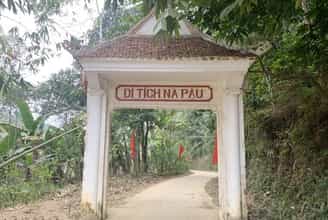
Na Pau Hill Relics
Na Pau place - Luong Bang commune, Cho Don district, Bac Kan province. Along with the historical relics of Ban Ca, Khuoi Linh, Pu Co Hill, Khau Ma, Na Quan and Na Pau are where Uncle Ho lived and worked in early 1951. In early 1951, President Ho Chi Minh went to work in Na Pau, Thit village, Luong Bang commune (Cho Don). On this hill, the Party Central Committee built a tunnel and built a shack for him to work. Na Pau - the place where people live and work - has a very convenient location for activities as well as when moving to avoid enemy eyes and ears. In front of Na Pau hill is a large field, capable of observing far away, next to it is a clear stream providing water, behind is a vast forest where when there is movement, he and his comrades In the agency, you can go straight to Phong Huan, Nghia Ta commune or go straight to Chiem Hoa (Tuyen Quang) very safely. From Km 18, Road 254 Cho Don - Thai Nguyen, follow the trail of Thit village about 150m to reach Na Pau hill. His house has two rooms, one for working, one for resting and a house of about 6 rooms for the agency's brothers (unit 41) to live in. About 70m west of the house floor is President Ho Chi Minh's bunker. The tunnel is T-shaped, the tunnel door height is 1.5m, 4m deep and divided into 2 balanced niches. Although a long time has passed, the rain has eroded the soil and covered a bit of the cellar door, but the cellar still seems to be intact. From the basement of President Ho Chi Minh, about 5 - 6 meters ahead, there is a quite large old tree, about 90 - 100 years old, called the Phay tree by local people. In front of the tunnel entrance is a flat area of land, where in the past he often grew vegetables... In front of Na Pau hill is Na Pau stream, next to it there are two giant trees crisscrossing each other, under the canopy of the tree is a big rock, where he lives. often fishing, bathing and washing. In Na Pau, he wrote many congratulatory letters and telegrams to agencies and organizations at home and abroad. On January 20, 1951, he signed a decision to reward the army units that won the Trung Du and Northeast campaigns, and at the same time sent 4 honorary flags to award to the army units that achieved many successes. accumulated and accomplished many outstanding victories. Also during this time, he signed many important decisions that contributed to bringing our people's resistance to victory. He also visited a number of agencies of the Party Central Committee and the army stationed in Cho Don area, encouraging the spirit of officers, soldiers, and compatriots to enthusiastically emulate killing the enemy and work productively to serve the resistance war. On the afternoon of February 27, 1951, President Ho left Na Pau - Luong Bang on his way to attend the Second National Congress of the Party in Chiem Hoa (Tuyen Quang). On June 28, 1996, the Ministry of Culture and Information recognized and ranked Na Pau Hill Relic, Luong Bang commune, Cho Don district, Bac Kan province as a national historical relic. Source: Bac Kan province electronic information portal
Thai Nguyen
8861 view
Rating : National monument

Van Mountain - Vo Mountain relic area
Van Mountain - Vo Mountain National Historical Site is located at the foot of Tam Dao mountain range, in the territory of Van Yen and Ky Phu communes, Dai Tu district, Thai Nguyen province, this place is associated with the famous name and homeland. General Luu Nhan Chu was famous for his talent and courageous spirit under the flag of great cause during the Lam Son uprising against the Ming invaders led by Le Loi in the 15th century. This is also the place where Liu Nhan Chu, his father Luu Trung and his brother-in-law Pham Cung recruited talented people, gathered patriots, and built an army to train soldiers and horses to prepare to fight the enemy to save the country. Luu Nhan Chu achieved many glorious victories and was highly rewarded by the king. Legend has it that the deep caves in the heart of Van Mountain - Vo Mountain are where the Generals of the Rebel Army's General Staff gathered to discuss major matters, thereby making victorious decisions in every battle against the invaders. northern. Nui Van - Nui Vo historical relic is the place to worship Prime Minister Luu Nhan Chu with a total campus area of about 2.5 hectares, including two main points and many secondary locations: Van Mountain is located in Ky Phu commune, Nui Van Martial colony in Van Yen commune. Other spots include: Quan Ngua Mountain, Horse Bathing Lake, Flag Mount, Da Mai Mountain and Xem Hill. To match the status of hero Liu Nhan Chu, the People's Committee of Thai Nguyen province built a temple to worship him at the foot of Mount Vo with an area of 57,622 square meters with the following main items: Main temple, festival yard, house. Ta Vu, Huu Vu, guest house, flower garden, gate, entrance road... At the end of 2009 the project was inaugurated. Every year on January 4, a festival to commemorate and honor the hero Liu Nhan Chu takes place at the relic. The statue of Luu Nhan Chu, 1.85m high and weighing 1500kg, was completed in bronze casting on December 20, Year of the Horse (August 2, 2015). The relic was ranked as a National relic in 1981 by the Ministry of Culture, Sports and Tourism in Decision No. 10-VHTT/QD dated February 9, 1981. Source: Department of Culture, Sports and Tourism of Thai Nguyen province
Thai Nguyen
8286 view
Rating : National monument
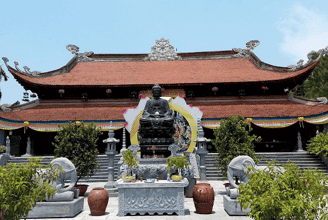
Hang Pagoda (Thai Nguyen City)
Hang Pagoda is located in the center of Chua Hang town, Dong Hy district, Thai Nguyen province, 3 km north of Thai Nguyen city, on the left of National Highway 1B, direction from Thai Nguyen to Lang Son. The pagoda has many characteristics of the mountainous region, so it was selected to be included in the collection of 100 typical Vietnamese pagodas published for the first time in 2011. According to legend, this is an ancient pagoda dating back to the 11th century and has been ranked Ranked as a national historical and cultural relic and scenic spot in 1999. Hang Pagoda, whose name is "Kim Son Tu", is also known as "Fairy Lu Buddha Cave". The Hang Pagoda scenic spot has three large, independent rocky mountains on flat land... The mountain in the middle is called "Huyen Vu", tall and sturdy, on both sides are two "Thanh Dragon - White Tiger" mountains rising. majestically high, three peaks connected by a saddle strip of about 1000m with an area of about 2.7 hectares at the foot of the mountain. Legend has it that "Hang Pagoda" dates back to the Ly Dynasty (11th century), considered a very prosperous period of Buddhism. The story is that: on a spring morning in the year of Nham Tuat, King Ly Thanh Tong woke up and told Nguyen Phi Y Lan about his dream last night, being led by Buddha to the spiritual land in Dong Hy, Thailand. Original. Ms. Nguyen Phi immediately went on a sightseeing tour, saw the charming scenery, majestic mountains, and large caves, so she took the cave and built a temple to worship Buddha. Perhaps "Kim Son Tu" was born from here, but people often call it Hang Pagoda because the pagoda is in a cave. Passing through the Three Gates, entering the pagoda, on the left and right sides there are two majestic statues of Dharma Protector Encouraging Goodness - Punishing Evil, riding an elephant and a tiger. The deeper you go, the wider the cave becomes, the stalactites on the cave dome seem like "old clouds mixed with strange rocks", many large stone pillars stand up against the cave dome like pillars against the sky. Around the cave walls, many stalactites protrude into altars and many strange and attractive shapes. The cave has many nooks and crannies, a path to heaven, a path to the underworld, and doors to the front and back, so the air in the pagoda is very fresh, cool in summer, warm in winter, incense smoke always shines, making the pagoda even more beautiful. becomes dark and mysterious. Hang Pagoda - Kim Son Pagoda with the legend "Cave of Tien Lu" is a water painting that has captivated the souls of many famous people and scholars of the "good people and guests" from the early Le dynasty to the Late Nguyen, still extant. Many poetic epitaphs in Chinese characters are engraved on the cave walls, praising the unparalleled natural beauty when visiting this place. According to the plan, Hang Pagoda will be built and restored divided into 5 areas, which is a conservation area including all caves and rocky mountains with a total area of 2.7 hectares; The spiritual main axis, including 8 works: Tam Bao main hall, ancestral church, Dharma preaching hall, stupa, bell tower, drum tower, three internal gates, three external gates; On the right side of the pagoda is the Zen monastery area; social charity center; grounds to serve the festival. Total investment cost is about 500 billion VND from socialized sources. With all the historical values inherent in this place and the wishes of the abbot and all the people, in the past 3 years, many Buddhist monks, nuns, units, and businesses have contributed their contributions and resources to build the temple. build a temple. The entire architectural complex of the pagoda is covered with water and paint. Behind the pagoda are mountains, in front of the pagoda is the winding Cau River surrounding it. The main works of the Three Jewels Palace, Three Entrance Gates, Bell Tower, and Drum Tower, which have been completed and are being completed, will soon become a place of worship, contributing to preserving a spiritual cultural heritage and enhancing the value of the relics. creating a beautiful landscape like a landscape painting, poetic in Penglai. With the great value of beautiful scenic relics from ancient times, after being restored and expanded, "Hang Pagoda - Kim Son Tu" will become a major Buddhist center of Thai Nguyen province and a tourist destination. Attractive spiritual calendar. Source: Thai Nguyen City Cultural and Media Center
Thai Nguyen
8142 view
Rating : National monument
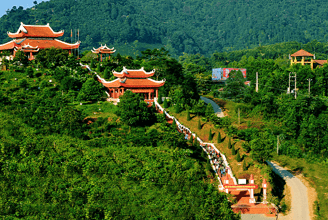
DINH HOA, THAI NGUYEN ATK ATK REMOTE AREA
ATK Dinh Hoa Special National Relic Area is the residence, work and activities of President Ho Chi Minh, the Party Central Committee and the Government during the resistance war against the French colonialists (1946 - 1954). Here, together with the Party Central Committee, President Ho Chi Minh made many important decisions related to the fate of the entire nation's resistance war against the French colonialists. The pinnacle was the Dien Bien Phu victory, "Illustrious in five continents, shaking the earth", ending the war and restoring peace in Indochina. ATK Dinh Hoa Special National Relic Area is evaluated "As the most important relic complex of the Vietnamese people in the 20th century". It is a red address where revolutionary historical traditions are educated for the young generation of Vietnamese people on pilgrimage to their origins, and deserves to be a meaningful eco-tourism destination in the strategy of attracting millions of domestic and international visitors. Offer incense at the President Ho Chi Minh Memorial House and visit relic sites. It is a vivid testament to efforts to preserve and promote the unique values of the revolutionary land. Dinh Hoa Safety Zone (ATK) historical relic is located in the communes of Phu Dinh, Diem Mac, Thanh Dinh, Dinh Bien, Bao Linh, Dong Thinh, Quy Ky, Kim Phuong, Binh Thanh and Cho Chu town, district Dinh Hoa, Thai Nguyen province, with a total conservation planning area of over 5,200km2. This is also the bordering area between Thai Nguyen, Tuyen Quang and Bac Kan provinces. In 1981, the relic site was ranked as a national monument by the Ministry of Culture and Information (now the Ministry of Culture, Sports and Tourism), including 13 component relics: 1. Cho Chu Prison (Cho Chu town, Dinh Hoa district) 2. Location of establishment of the Vietnam Liberation Army (Dinh Bien commune, Dinh Hoa district) 3. Place where Uncle Ho lived and worked at Khau Ty hill in 1947 (Diem Mac commune, Dinh Hoa district) 4. Location where Uncle Ho lived and worked at Tin Keo hill (1948 - 1954), Phu Dinh commune, Dinh Hoa district 5. Uncle Ho's relic cluster in Khuon Tat: Banyan tree, Khuon Tat stream section - where Uncle Ho bathed, washed and fished, Uncle Ho's stilt house and cellar in Na Dinh hill (Phu Dinh commune, Dinh Hoa district) 6. Location of General Secretary Truong Chinh and the Party Central Committee's office at Phung Hien (1947 - 1949), Diem Mac commune, Dinh Hoa district 7. Location of the General Command of the Vietnam People's Army (1949 - 1954) in Bao Linh commune, Dinh Hoa district 8. Khuon Tat 7-tier waterfall (Phu Binh commune, Dinh Hoa district) 9. Location of establishment of the Vietnam Journalists Association (Diem Mac commune, Dinh Hoa district) 10. Location of establishment of the Vietnam Peace Committee (Diem Mac commune, Dinh Hoa district) 11. Location of establishment of the Central Inspection Committee (Diem Mac commune, Dinh Hoa district) 12. Location of the first issue of the People's Army Newspaper (October 20, 1950) Dinh Bien commune, Dinh Hoa district 13. Location of Pu Don hill, where President Ho Chi Minh presided over the ceremony conferring the military rank of General on comrade Vo Nguyen Giap (1948) (Phu Dinh commune, Dinh Hoa district) An Toan Zone (ATK) Dinh Hoa is truly the most important relic complex of the Vietnamese people in the 20th century, a resistance capital with key relic areas: Pac Bo (Cao Bang), Tan Trao (Tuyen Quang), ATK Dinh Hoa, Cho Don, Chiem Hoa, Son Duong, Yen Son (Thai Nguyen, Bac Kan, Tuyen Quang) have meaning and value in many aspects. In particular, ATK Dinh Hoa was the place that initiated, organized and directed the Dien Bien Phu campaign to win, end the war, and restore peace in Indochina... Source: Department of Cultural Heritage
Thai Nguyen
7805 view
Rating : Special national monument
Nearby tourist attractions
See all
Ba Be Lake
Ba Be Lake is a famous eco-tourism area in the Northeast region of Vietnam with many interesting landscapes and biological diversity. Coming to Ba Be Lake, visitors will be immersed in the beautiful natural scenery, enjoy traditional dishes, and discover the unique cultural identity of the ethnic people here... Ba Be Lake is 70km northwest of Bac Kan city, located in the center of Ba Be National Park, in Nam Mau commune, Ba Be district; The Northeast borders Cao Tri and Khang Ninh communes; The Southeast borders Nam Cuong commune and Da Vi commune, Na Hang district, Tuyen Quang province. This is one of the largest natural freshwater lakes in Vietnam. In 1995, Ba Be Lake was recognized by the World Freshwater Lakes Conference held in the US as one of the world's 20 special freshwater lakes that need to be protected. The lake was formed about 200 million years ago due to a major geological upheaval, causing the subsidence of limestone mountains, surrounded by limestone mountains mixed with ancient sandstone and primeval forests. The geology and geomorphology of the Lake area are extremely complex, leading to the formation of breathtakingly beautiful landscapes with unique geological and soil structures, leading to the formation of many different ecosystems. The survey shows a complex mixture of typical Karst ecosystems (a typical weathering phenomenon of limestone mountainous areas eroded by running water) and non-Carst ecosystems in harmony with river and lake ecosystems. Such geological and biological diversity is difficult to encounter in other parts of the world. Ba Be Lake is located in the arc of Gam River, the terrain is rugged and cut by mountains from 1,400m to 1,600m high and interspersed with valleys. The lake is filled with water from two rivers, Cho Leng River and Nam Cuong River, then flows to Nang River, pouring down Dau Dang waterfall. Ba Be Lake is made up of 3 lakes named Pe Leng, Pe Lu and Pe Lam. The lake is more than 08km long, the widest place is 02km, the water surface area is about 500ha, the average depth is 20m, there are places up to 35m deep, there are many species of aquatic animals and freshwater fish living, including many rare and special species recorded in the Vietnam Red Book such as King Carp, Green Bass, Chien fish... Ba Be Lake's water is clear blue, cool all year round, the entire lake is like a watercolor painting. boldly imprinted with mountain silhouettes, covered with clouds and sky, looking like a giant mirror reflecting the winding mountain ranges hidden on the water surface. On the surface of the lake there are many beautiful small islands such as Ba Goa Island, An Ma Island... Around the lake are stilt houses of the Tay people. After a day of walking on the lake, visitors can stop at these places to feel the warm, hospitable life of the villagers. When choosing to rest in the spacious and airy stilt houses, visitors will enjoy traditional dishes of the mountain people, sip a cup of wine fragrant with sticky corn, immerse themselves in zither songs, then tunes, sli, sluon songs, hear the story of Ba Be Lake with the legend of Ba Goa Island, dugout canoes... Ba Be Lake has the majesty of the mountains and forests, and a charm and softness with the water blending with heaven and earth, the surrounding mountains and forests, sometimes moss green, sometimes blue, sometimes mixed with the yellow of the trees, sometimes the white of the clouds... If at some point you need some peace, need quiet, then go to Ba Be. That place will not disappoint you. Ba Be is like a jade amidst the mountains and hills of the Northeast, so fresh, pure and elegant.
Thai Nguyen
8401 view
From January to December

Ba Be National Park
Ba Be National Park is located more than 200 km from Hanoi capital, is an ideal eco-tourism destination for those who love nature and like to explore. Worthy of the title "treasure of Bac Kan mountains and forests", Ba Be garden always makes visitors admire and enchanted every time they have the opportunity to admire it. Coming here, you will be immersed in the wild natural scenery, admire the diverse flora and fauna ecosystem, or more interestingly, enjoy delicious local dishes. Ba Be National Park belongs to Ba Be district, Bac Kan province, stretching across 5 communes of Quang Khe, Khang Ninh, Cao Tri, Cao Thuong and Nam Mau. Dubbed the "treasure of Bac Kan mountains and forests", this place is famous for many beautiful landscapes. Among them, the most prominent is still Ba Be Lake - one of the largest natural freshwater lakes in Vietnam and the world. Ba Be Garden possesses a diverse ecosystem with more than 1,000 plant species and 80 rare animal species. Besides biological diversity, this National Park also attracts visitors with its dreamy beauty that is rare to find anywhere else. Currently, many types of tourism are developing in Ba Be, promising to bring visitors unforgettable experiences. Ba Be Garden is surrounded by primeval forests and rocky mountains, cool all year round. Therefore, the most ideal time for you to travel to Ba Be National Park is in the summer months. If you want to enjoy the bustling festival atmosphere and participate in folk games, you can go in January, around the 9th - 10th day of Tet. A world-famous landscape, Ba Be Garden is both a large biosphere reserve and a flooded Ramsar site on limestone mountains. Coming here, visitors will admire the magnificent cave system, diverse and rare flora and fauna. If you have the opportunity to visit this National Park, do not forget the list of locations including: Puong Cave, Ba Goa Island, Dau Dang Waterfall, Ao Tien, Ba Be Lake, Hua Ma Cave, Tham Phay Cave.
Thai Nguyen
8254 view
From January to December

Fairy Cave
Fairy Cave is located in Phja Trang mountain in Luong Ha commune (Na Ri district). Located more than 50km from the center of Bac Kan province. Seen from afar, Nang Tien Cave looks like a young girl sleeping soundly. Nang Tien Cave is located deep inside the mountain about 60m, the cave entrance is 6m wide and 6m high, the cave is about 30-50m high. The cave is surrounded by trees, so when entering the cave from outside, visitors will feel a cool, pleasant atmosphere and the cool, gentle scent of plants. When entering the cave, visitors will be surprised by the magical beauty created by the stalactites and stone columns. Fairy Cave is known for its wild beauty bestowed by nature and mysterious legends about the 7 fairies. Those elements have painted a fanciful and mysterious cave that is famous in Vietnam today. You can visit Fairy Cave at any time of the year. Because the cave is surrounded by trees, the atmosphere here is always cool even on hot sunny days. But please note that if you want to visit Fairy Cave from May to October, you must pay attention to the weather forecast, because during these months, Bac Kan province often rains, which will affect the tour itinerary. Your Fairy Cave. When you enter the cave entrance, you will feel like you are entering a completely different world. The darkness inside the cave contrasting with the light outside will make your senses more sensitive. You will clearly feel the gurgling sound of flowing water, the blurry scenery brought by steam, the gentle atmosphere... The entrance to the Fairy Cave is surrounded by cool stone slabs. Looking up at the cave ceiling, you will see stalactites formed millions of years ago. There are stalactites that have appeared a long time ago, like stone towers flowing back from the ceiling of the cave to the underground, forming solid stone columns, making the cave here even more solid. Going deep inside is the large central space of Fairy Cave. Surrounded by other small caves, the scenery here is even more sparkling and magical. Stalactites and stone slabs with strange shapes formed a long time ago on the ceiling of the cave will make you think of beautiful flowers. Every corner in Fairy Cave is associated with a story full of mystery and fantasy. It can be called "Fairy Pond", according to legend, it is the place where fairies use to bathe and play every day. Going through the "Fairy Pond" you will see sunken terraces with stagnant water, depending on the weather, the amount of water stagnant inside is more or less. That scene will make you feel like you are lost in the terraced fields of the people. high mountainous areas. That may be the reason this place is called “Fairy Field”, where fairies would plant and harvest crops. The most magical fairyland is probably the "Fairy Chamber", this place is made up of countless stalactites of all different shapes and brilliant colors and especially has only one path. Seeing all those scenes, you will immediately think that this is the bedroom of fairies in a fairyland. This translucent beauty is also found in the sparkling stalactites falling to the ground, looking like the shiny, smooth hair of beautiful fairies.
Thai Nguyen
8661 view
May to October

Puong Cave
Puong Cave is a famous tourist destination located in Ba Be National Park, this is a karst cave in Lung Nham limestone mountain on Nang River in Ba Be district, Bac Kan province. Puong Cave is located in the north of Ba Be National Park and about 5km from Cho Ra town center. Puong Cave was created by the Nang River flowing through Lung Nham limestone mountain. Puong Cave has a length of 300 m, a ceiling of over 20 m high and an average width of 30 m with a mysterious natural scenery. Setting foot inside, visitors will witness many towering cliffs and stalactites with extremely special shapes and colors. This is also home to 23 bat species with numbers reaching up to tens of thousands. Puong Cave belongs to Ba Be National Park with many rocky mountains and forests surrounding it, and Ba Be Lake acts as an 'air conditioner', helping this place have cool weather. batch all year round. If you plan to travel to Ba Be National Park and visit Puong cave, you should come in the summer (May to September), when you will best feel the coolness here. In addition, from the 9th to the 11th of the first lunar month, in Ba Be, the Tay ethnic group's Long Tong festival also takes place. If you have the opportunity, remember to arrange to attend. Unlike many caves, to travel to Puong cave, visitors are forced to go by boat inside, the reason is that Puong cave was formed by the Nang River flowing through Lung Nham limestone mountain. When you move closer to the cave, you will immediately see that the cave entrance is not too big, but is filled with wildness. Exploring the cave on dugout boats, slowly floating into the cave entrance will definitely be very interesting. Inside Puong cave, visitors will immediately witness the magnificence of stalactites in diverse shapes falling from above, along with a system of tall, wild cliffs. The space inside is extremely spacious, combined with the water below to create a very cool feeling. If you don't know, Puong cave has a length of up to 300m, the cave arch is more than 20m high. As you move deeper, the space of Puong cave will become darker and the light will become weaker. At this point you will need a flashlight to see the scenery around you clearly. From here, visitors will see more clearly many stalactites pouring down like a waterfall, many gray stone blocks of diverse shapes stacked on top of each other very strangely. Moreover, inside Puong cave there is also a fairly flat mudflat where boats can come and anchor to help visitors go inside the cave easily. Puong Cave consists of two adjacent caves, Upper Cave and Lower Cave, also known as Puong Tenh and Puong Tau. The road here is very easy to navigate, thanks to that, many "thousand Like" check-in photos have been created here. Currently, Puong Cave is a tourist destination that many tourists choose to visit. Coming here, in addition to Puong cave, visitors can also choose to visit many other places in Ba Be national park such as Ba Be lake, Dau Dang waterfall, Hua Ma cave, An Ma temple, Ban Vang Silver waterfall, etc. ..
Thai Nguyen
8194 view
May to September

Dau Dang Waterfall
Dau Dang Waterfall is one of the symbols of Bac Kan tourism, attracting tourists with its majestic but equally poetic beauty. Originating from the Nang River, weaving through forests and cliffs, this place is truly an impressive natural picture, an ideal destination for weekend vacations. Dau Dang Waterfall is a waterfall formed by the Nang River, in Ba Be National Park, about 16 km from the center of Cho Ra town, Bac Kan. The river flows under Lung Nam limestone mountain, forming Puong cave. When flowing to Hua Tang village of Nam Mau commune, it is blocked by hundreds of large and small rocks. In this location, the terrain has a slope of about 500 m, thanks to which the majestic and impressive Dau Dang waterfall was born today. The waterfall falls strongly into the Nang River gorge, passing through giant limestone rocks stacked on top of each other. The waterfall is divided into 3 sections, the first section has water pouring down from above with strong force and quite tortuously. In the second part of the waterfall, the water splits into two different streams. In the third part, the water flows smoothly, bringing a dreamy beauty, attracting tourists. Not only famous for its heavenly scenery, Dau Dang Bac Kan waterfall also has great significance for local agriculture. Every year, the water of this waterfall will transport a large amount of silt from upstream, making the trees and fields greener. Now, along with Ba Be Lake, Dau Dang waterfall is an attractive Bac Kan tourist destination that tourists should not miss. Normally, when traveling, tourists will combine visiting Ba Be Lake and Dau Dang waterfall. Therefore, you must choose the right time to fully explore the beautiful natural scenery in both of these locations. In winter, the weather here is quite cold, in summer and autumn there will be sudden rains. Therefore, if you have the opportunity, you should go to the waterfall in the spring months, the scenery is beautiful and the weather is also quite favorable. If you want to admire the majesty of the waterfall and need beautiful light to take photos, morning is the best time to depart. Dau Dang Waterfall is one of the most famous landscapes in Bac Kan, with a special attraction for tourists. The stream of water falls from above, colliding with rocks, creating a resounding noise that can still be heard clearly from several kilometers away. Coming closer to the waterfall, visitors will see the majestic beauty of the waterfall and the mountain landscape. Looking up from below, the water splashes white foam, creating sparkling, heart-stoppingly beautiful images. On beautiful days, sunlight will shine through the water surface, making the water bubbles look exactly like diamonds hidden at the bottom of the waterfall. That scene makes many tourists gasp in amazement because of its wild beauty mixed with a bit of mystery and extreme rarity. Surrounding Dau Dang waterfall are vast, green mountains and forests, creating a fresh, airy atmosphere. Trees grow between majestic cliffs, proving incredibly strong vitality. The water flows without a moment of rest, pouring down the Nang River, passing through large limestone rocks stacked into stone formations. On both sides of the bank are rows of lush green trees, spreading shade throughout the entire area.
Thai Nguyen
8301 view
April to October
 AI Travelviet