
 vn
vn en
en ja
ja ko
ko zh
zh


Lạng Sơn's must-try specialties are an absolute highlight when you visit, and they make perfect souvenirs to take home!

When you travel to Lạng Sơn, the local specialties are an absolute must-try, perfect for both savoring during your visit and bringing home as unique souvenirs. These dishes are not only incredibly delicious but also deeply embody the rich cultural essence of the highland region. Each one leaves a distinctive mark, creating an unforgettable culinary memory for anyone fortunate enough to taste them.
Lạng Sơn, a northern highland province, captivates visitors not only with its majestic natural landscapes and pleasant climate but also entices them with its unique culinary flavors.Must-Try Lạng Sơn Specialties for Travelers and Souvenirsare dishes deeply rooted in cultural identity, encapsulating the essence of Lạng Sơn's mountains and forests. JoinTravelviet.netto discover Lạng Sơn's specialties in this article!
Related articles:
- 22 beautiful tourist destinations in Lang Son cause travel fever
- Get Ready to Explore Lạng Sơn: Your Guide to Over 10 Unique Historical Sites
Must-Try Lạng Sơn Specialties for Travelers and Souvenirs
The must-try specialties in Lạng Sơn, perfect for tasting during your trip and buying as gifts, are the unforgettable "flavors" that contribute to the unique identity of this border region. Below are the Lạng Sơn specialties you should savor and purchase as souvenirs when visiting this area.
Lạng Sơn Sour Pho
Estimated price: 25,000 - 35,000 VND/serving

Lạng Sơn Sour Pho is one of the most distinctive dishes in Lạng Sơn, renowned for its refreshing sourness, rich fattiness, and captivating flavor. Soft, chewy pho noodles are blended with a savory sauce, served with char siu pork, fried potatoes, pork liver, Chinese sausage, and roasted peanuts – all creating an unforgettable harmonious combination. More than just a famous highland delicacy, sour pho is a culinary experience every visitor to Lạng Sơn should try at least once.
Steamed Rice Rolls with Egg
Estimated price: From 7,000 VND/roll

Lạng Sơn Steamed Rice Rolls with Egg is a unique dish, boasting a rich, aromatic flavor that captivates diners from the very first bite. Unlike regular steamed rice rolls, this version is prepared with fresh chicken egg, creating a golden, silky-smooth wrapper with an enticing aroma.
As the rolls are cooked to perfection, minced meat and crispy fried shallots are sprinkled on top, all harmonizing with the savory dipping sauce. The delicate combination of rich egg, soft rice rolls, and rustic toppings makes Lạng Sơn Steamed Rice Rolls with Egg an unforgettable breakfast dish in this border region.
Hữu Lũng Grilled Fermented Pork
Estimated price: approximately 50,000 VND/serving.
Hữu Lũng Grilled Fermented Pork is a renowned specialty of Lạng Sơn, often chosen by visitors as a souvenir. Unlike the nem found in Southern Vietnam, this dish is made from finely sliced pork and pork skin, mixed with roasted rice powder, and then fermented naturally in banana leaves. When grilled, the nem releases a fragrant aroma, with a subtle sourness blending perfectly with the rich, savory grilled pork flavor, making it unforgettable for anyone who tries it.
Banh Phong (Puffed Rice Cakes)
Estimated price: 30,000 VND/bag

Lạng Sơn Banh Phong (puffed rice cakes) are a rustic yet captivating snack, especially popular with children and visitors from afar. Unlike the banh phong from Southern Vietnam, these are made from glutinous rice soaked with ash from the Trà Dù tree – a distinctive forest plant – creating an unforgettable crispy, subtly sweet, and aromatic flavor. With their compact, easy-to-carry shape, these are a must-try Lạng Sơn specialty to savor during your trip and buy as a gift, offering a unique taste deeply rooted in the Northeast mountains.
Khau Nhuc (Braised Pork Belly)
Estimated price: approximately 200,000 - 300,000 VND/kg
Khau Nhuc is one of Lạng Sơn's must-try specialties, perfect for tasting during your trip and buying as a gift, known for its rich flavor and elaborate preparation. This dish is made from thick, tender pork belly, marinated with a variety of spices like five-spice powder, garlic, ginger, and rice wine, then steamed for several hours until the meat is incredibly tender, rich, and flavorful without being greasy.
Although originating from Chinese cuisine, Khau Nhuc in Lạng Sơn has been subtly adapted to suit Vietnamese palates, becoming an indispensable delicacy for traditional feasts and celebrations. It's excellent served with rice, sticky rice, or bread.
Roasted Duck with Mac Mat Leaves
Estimated price: 300,000 - 500,000 VND/duck

A trip to Lạng Sơn wouldn't be complete without trying the Roasted Duck with Mac Mat Leaves. This is a must-try Lạng Sơn specialty, perfect for tasting during your trip and buying as a gift, renowned for its golden, crispy skin and tender, sweet meat infused with the fragrant aroma of mac mat leaves.
Ducks are carefully selected, cleaned, and meticulously marinated before being roasted over hot coals, creating a dish with a unique flavor that is rich but not greasy. Whether enjoyed with bread, white rice, or dipped in soy sauce, Roasted Duck with Mac Mat Leaves always leaves a lasting, unforgettable impression on diners.
Banh Ngai (Mugwort Cake)
Estimated price: approximately 4,000 - 7,000 VND/piece

Banh Ngai is one of Lạng Sơn's must-try specialties, perfect for tasting during your trip and buying as a gift. Made from pounded young mugwort leaves blended with fragrant, sticky glutinous rice, Banh Ngai not only boasts an eye-catching vibrant green color but also offers a subtle sweetness and a distinctive, faint aroma of forest leaves.
The process of making the cake is quite elaborate: mugwort leaves must be soaked in ash water, thoroughly washed, stripped of fibers, then pounded finely before being mixed with cooked glutinous rice to form a smooth, pliable dough. Each Banh Ngai is like a small gift, embodying the culinary essence of the highlands.
Black Banh Chung (Sticky Rice Cake)
Estimated price: 35,000 - 50,000 VND/cake

Black Banh Chung, a unique cake that piques the curiosity of any food enthusiast from the moment they hear its name, is a distinct specialty of Lạng Sơn with an unmistakable deep color. The cake's wrapper is made from glutinous rice soaked with straw ash or the bark of the Núc Nác tree, creating its characteristic dark hue and soft, chewy texture.
The filling is a delicate blend of fatty pork, mung beans, and a hint of fragrant cardamom, delivering a distinctive, rich flavor unique to Black Banh Chung. This cake often appears during Tết (Lunar New Year) and other traditional festivals, becoming a cherished culinary cultural feature of the Lạng Sơn people.
Banh Ap Chao (Fried Duck Cake)
Estimated price: 15,000 - 25,000 VND/cake

Banh Ap Chao is an enticing Lạng Sơn specialty, impressing with its crispy golden crust encasing a rich, aromatic duck meat filling. The cake becomes even more perfect when dipped in a refreshing papaya fish sauce mixed with vinegar, stimulating the palate and highlighting its unforgettable distinctive flavor. The harmonious blend of the crunchy crust and tender, fragrant filling creates a unique culinary experience, making Banh Ap Chao a must-try dish for any visitor to this region.
Rock Snails
Estimated price: 50,000 - 100,000 VND/kg

Rock Snails (also known as mountain snails) are a specialty in Lạng Sơn that only appear during the rainy season, sparking curiosity among many visitors. Locals typically catch fresh snails, clean them, and then steam them with fragrant lemongrass, creating a simple yet rich and nutritious dish.
The snail meat is delightfully crunchy, offering a unique and appealing texture when dipped in a special fish sauce. Notably, rock snails are not only a delicious dish but are also known for their properties that may help treat gout, making them a valuable choice for the indigenous people amidst the mountains of the Northwest.
Specialty Vegetables
Estimated price: 5,000 VND/bunch
If you're wondering, "What unique, affordable, and practical souvenirs can I buy in Lạng Sơn?", then specialty vegetables are an excellent suggestion not to be missed. Lạng Sơn's cool, fresh climate creates an ideal environment for many types of mountain vegetables to thrive.
Among them are unique varieties like cải làn (Chinese kale), rau sắng (forest spinach), rau bò khai (a type of wild vegetable), and rau sau sau (sweetgum leaves) – vegetables rarely found in the lowlands. Fresh, with a rich mountain flavor, these vegetables are always popular with tourists who choose to bring them home as gifts, sharing a distinctive taste of Lạng Sơn with family and friends.
Mẫu Sơn Wine
Estimated price: 100,000 VND/bottle.

Mẫu Sơn Wine is the essence born from the land, sky, and the skillful hands of the Dao ethnic people, preserved through many generations. The unique brewing secret originates from selecting pure spring water at an altitude of over 1000m, combined with yeast made from more than 30 rare medicinal herbs, creating a wine that is not only as clear as spring water but also exudes a rich, gentle aroma and sparkling effervescence.
Unlike the taste of ordinary rice wine, Mẫu Sơn Wine offers a smooth, rich sensation with a hint of the characteristic sweet aroma of mountain herbs. Just one taste, and its flavor will be etched in your memory.
Forest Honey
Estimated price: 300,000 VND/liter.
A must-try Lạng Sơn specialty to savor during your trip and buy as a gift is pure forest honey, a precious offering from the wild mountains here. With its cool climate and stable temperatures, Lạng Sơn provides ideal conditions for wild bee colonies to thrive and produce sweet, nutritious honey. Lạng Sơn forest honey is not only a rich taste of nature but also considered a valuable remedy for health, becoming even more fragrant and delicious with age, making it a truly worthwhile gift for family and friends.
Banh Khao (Sweet Rice Cake)
Estimated price: 10,000 - 15,000 VND/cake block.

If you visit Lạng Sơn around Tết (Lunar New Year), don't miss a trip to Tràng Định district, the birthplace of the unique Banh Khao, found nowhere else in Vietnam. Banh Khao is not only a traditional dish deeply connected to the customs of the Tày and Nùng people but also a delicate masterpiece of artisanal baking, requiring skill and meticulousness through every step: soaking rice, fermenting dough, sifting, mixing with slab sugar, and then molding.
The finished Banh Khao has a gentle, smooth sweetness that is hard to forget once tasted. Moreover, each cake is carefully wrapped in brightly colored cellophane, making it visually appealing and perfect as a gift. Today, Banh Khao is not just a traditional specialty of Lạng Sơn but also a distinctive cultural symbol, an meaningful souvenir that visitors shouldn't miss when leaving the region.
Mẫu Sơn Peaches
Estimated price: 30,000 VND/kg

Nestled quietly on the high mountain slopes of Lộc Bình and Cao Lộc districts, Mẫu Sơn peaches have long been the pride of Lạng Sơn, boasting a distinct color and flavor. The peach season occurs only once a year, but every fruit is plump, sweet, and refreshing. Unlike the vibrant red peaches from China, Mẫu Sơn peaches have a green skin with hints of pale pink, covered in a soft, velvety fuzz.
When you taste them, you'll immediately experience a delicate sweetness, a crisp texture, and the subtle aroma of Mẫu Sơn's mountain sun and wind. This gentle sweetness and pure fragrance make Mẫu Sơn peaches an unmissable specialty, a precious gift every visitor wants to take home after their trip.
Chi Lăng Custard Apples
Estimated price: 45,000 VND/kg

Visiting Lạng Sơn without trying the specialty Chi Lăng custard apples (also known as Đồng Bành custard apples) and buying them as gifts would be a huge oversight. Widely grown in Chi Lăng district, the custard apples here are famous for their uniquely sweet and unforgettable flavor.
The fruit segments are thick and uniform, with pure white, chewy, and appealingly sweet flesh, distinctly different from the softer varieties found elsewhere. As the largest "custard apple hub" in the country, Lạng Sơn is the ideal destination to choose fresh, delicious custard apples, making meaningful gifts for your loved ones after your trip.
Bảo Lâm Persimmons
Estimated price: 60,000 VND/kg

A must-try Lạng Sơn specialty to savor during your trip and buy as a gift is Bảo Lâm persimmons. From March to August each year, the entire Bảo Lâm region is awash with the vibrant orange-yellow hues of ripe persimmons. The persimmons here are incredibly sweet, seedless, and have a delightfully chewy-crisp texture, creating an unforgettable tasting experience.
The people of Lạng Sơn not only enjoy fresh persimmons but also creatively transform them into persimmon wine, juice, or dried persimmons, each retaining the distinctive flavor of this region. Bảo Lâm persimmons will undoubtedly be a meaningful gift, rich with the taste of home, for you to bring back after your journey exploring Lạng Sơn.
Bắc Sơn Tangerines
Estimated price: 35,000 VND/kg

If you have the chance to climb Mẫu Sơn peak in winter, besides admiring the vast white snow and ice covering the mountain slopes, visitors can also enjoy the golden, juicy Bắc Sơn tangerines swaying on their branches. Bắc Sơn tangerines are known for their thin skin, harmonious sweet-sour taste, and distinctive rich aroma.
Each fruit weighs between 80 and 150 grams, making it a must-try Lạng Sơn specialty to savor during your trip and buy as a gift. The tangerine season typically peaks from late November to January of the following year, which is also the ideal time to purchase fresh, fragrant, and sweet tangerines as meaningful and affordable presents.
The must-try specialties in Lạng Sơn, perfect for tasting during your trip and buying as gifts,will surely offer you impressive and memorable culinary experiences. We hope the suggestions above fromTravelvietwill help you easily choose meaningful gifts and fully enjoy the distinctive flavors of this Northeast mountain region during your journey. We wish you a pleasant trip and many beautiful memories in Lạng Sơn!
Lang Son 3166 view
Update day : 22/05/2025
Monuments close by
See all
Hoang Van Thu Memorial Area
Comrade Hoang Van Thu (1909 - 1944) was a revolutionary and a loyal communist soldier of the Communist Party of Vietnam. He was born on November 4, 1909 in a Tay family in Phac Lan village, Nhan Ly commune, Van Uyen district (now Hoang Van Thu commune, Van Lang district), Lang Son province. From a young age, he was soon enlightened about the revolution. In 1928, he and his friends went to China to find a way to save the country. In 1930, he returned to Van Uyen district to build a revolutionary movement, establishing the first Indochina Communist Party cell in Lang Son. In 1938, he was assigned to be in charge of the Northern Region Party Committee and then assumed the responsibility of Secretary of the Northern Region Party Committee. In 1941, he was elected to the Party Central Committee Standing Committee. On August 25, 1943, comrade Hoang Van Thu was captured by the enemy in Hanoi and executed on May 24, 1944. Although Comrade Hoang Van Thu's time in revolutionary activities was not long, he made many important contributions to building and developing the Party Central Committee's base before the August Revolution during the period of terror by the colonial government. most fierce. Comrade Hoang Van Thu was posthumously awarded the title of hero and martyr by the government of the Democratic Republic of Vietnam. To commemorate and express gratitude to comrade Hoang Van Thu, the Party Committee, government and people of Lang Son province have built a number of commemorative works to commemorate his comrade in Lang Son city and Van Lang district, his hometown. will. The monument of Comrade Hoang Van Thu is located next to the Provincial Museum, the main gate of the monument grounds faces the Provincial People's Committee, on Dinh Tien Hoang Street, Chi Lang Ward, Lang Son City. Inaugurated in 1994. The relic of House No. 8 Chinh Cai Street is currently located on Ky Lua Street, Hoang Van Thu Ward, Lang Son City. From 1923 to 1927, comrade Hoang Van Thu studied at the French-Vietnamese school and lived at house number 8, Chinh Cai street. In the dormitory, in addition to studying, he drafted a number of leaflets and slogans with the content of mobilizing the masses to fight for food, clothing, freedom, democracy and against colonialism. , feudal oppression. Currently, this place has become a small museum displaying the revolutionary life of comrade Hoang Van Thu. On New Year's and holidays, the relics of House No. 8 Chinh Cai are open to welcome visitors, study and offer incense. Comrade Hoang Van Thu's memorial relic site is located in Hoang Van Thu commune, Van Lang district, 26 km north of Lang Son city. The relic area was completed with cultural landscape items and revolutionary historical relics associated with the life and career of comrade Hoang Van Thu, inaugurated on October 25, 2009 on the occasion of the 100th anniversary. Comrade Hoang Van Thu's birthday (November 4, 1909 - November 4, 2009). Source: Lang Son Tourism Promotion Information Center
Lang Son
8659 view
Rating : National monument
Chi Lang Pass
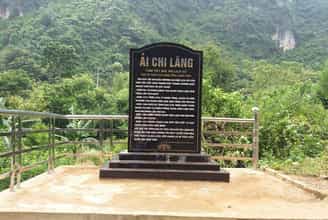
Chi Lang is a land rich in heroic historical traditions of the Vietnamese people, associated with the glorious victories of our ancestors throughout the history of building and defending the country. Chi Lang is the most dangerous pass on the main road from Nam Quan to Thang Long. Chi Lang Pass is a small, oval valley, the north and south ends are narrow, almost closed. The length of Chi Lang pass is about 4km, the widest part is more than 1km. Many years ago, documents about Chi Lang relics recorded 52 relics (including existing relics, vestiges, place names and remaining oral stories). in folklore). However, according to the results of the relic inventory conducted by the Department of Culture, Sports and Tourism of Lang Son province in 2018, there are currently only 46 relics, locations, and landmarks still recorded, the remaining 6 have been completed. All traces are lost. Chi Lang historical relic site is a narrow valley, sandwiched between the Bao Dai and Cai Kinh mountain ranges, where the strategic talent and military art of the Lam Son insurgents were demonstrated, contributing decisively to the victory of the Vietnamese army. resistance war against Minh. In prehistoric times, Chi Lang was the homeland of famous archaeological cultures such as: Bac Son, Mai Pha with a system of typical relics such as Lang Nac Cave, Nguom Sau Cave, Na Ngum Cave... which are places to preserve and develop. There are relics, scraps, stone axes, pottery pieces... that demonstrate the early and prehistoric stages of the ancient Vietnamese people that are valuable for scientific research. Chi Lang marks the nation's heroic history with layers of history, layers upon layers of victories of our ancestors against the Song Dynasty twice (in 981 and 1077), and two resistance wars against the Yuan invaders (in 1285). and 1287), the fight against the Manchu invaders (1788 - 1789), to the resistance war against the French colonialists and American imperialists (typically the Hoang Dinh Kinh uprising in the years 1882 - 1888, female guerrilla Quang Lang shot down an American plane). Historically, this is the place where strategic battles continuously took place in Vietnam's military history, culminating in the Chi Lang victory in 1427, when our army and people achieved a resounding victory in destroying The reinforcement army of more than 100,000 Ming soldiers led by Lieu Thang contributed to ending the long resistance war, overthrowing the domination of the Ming Dynasty and regaining the entire country. The Chi Lang victory has entered Vietnam's history as a brilliant milestone, along with the victories of Bach Dang, Nhu Nguyet, Rach Gam, Xoai Mut, Ngoc Hoi - Dong Da, Dien Bien Phu, Ho Chi Minh Campaign... Chi Lang Victory is a majestic song about patriotism, the will to independence, the strength of great national unity, the spirit of determination to win and the wonderful military art of our nation. With those important historical values, on April 28, 1962, the relic site was ranked as a national monument by the Ministry of Culture, Sports and Tourism; Chi Lang was awarded the title "Hero of the People's Armed Forces" by the President; In 2019, the relic site was ranked a special national monument, affirming the relic's important position in the treasure trove of Vietnam's national cultural heritage. Source: Lang Son Tourism Promotion Information Center
Lang Son
8528 view
Rating : Special national monument

Bac Son Uprising relic site
The Bac Son Uprising relic site has typical and important historical value in the system of Vietnamese revolutionary military historical relics. The relic site is a safe place to hide and protect senior agencies and officials of the Central Committee and the Northern Party Committee during the period of revolutionary activities in Bac Son, where the smooth communication station between the Central Government and the Central Government is located. The Northern Party Committee and other areas are the place to provide materials for the training of revolutionary cadres of the Party. The relic includes 12 sites, which were ranked as national relics in 1992, distributed in 6 communes: Tan Huong, Hung Vu, Vu Lang, Vu Le, Tan Lap, Long Dong in Bac Son district, Lang Son province. , include: 1. Bo Tat Relic (Mo Tat): the place where the first Party Cell of Bac Son District Party Committee was established (September 25, 1936 - September 25, 2021). 2. Na Kheo hill relic: where there is a system of trenches 3. Nong Luc Communal House Relics: On September 2, 1940, party members, after escaping from prison under the colonial regime, moved to Nong Luc Communal House for a meeting. The meeting was held with the purpose of choosing an opportunity to carry out an uprising to fight against the French colonialists to liberate Mo Nhai station. 4. Mo Nhai Fort Relics: is a military base built by the French colonialists as soon as they arrived to invade our country. 5. Tham Thoong - Dap Di relic: is a pass located on provincial road 241 (Bac Son - Vu Lang route). 6. Vu Lang School Relics: The school was built by the French colonialists with the purpose of training a team of lackeys to work for them. 7. Sa Khao relic (Phia Khao): a place to hide cadres and activities of the Central Cadre Union and the Bac Son Party Committee. 8. Khuoi Noi Relics: This is the secret area of operation of the National Salvation Army. 9. Lan Pan Relic: is the location of secret activities of the Party Central Committee's Delegation during the implementation of Central Resolution 8 and consolidating the development of the grassroots armed forces at Bac Son Party Committee. 10. Lan Tay - Mo Pia relic: includes 2 points: Mo Pia cave and Lan Tay site. 11. Mo Re cave relic: This is the place of secret activities of the leaders of the Northern Party Committee and the place where the fierce battle to break the enemy siege took place on August 28, 1941. 12. Tam Canh Pass Relic: was chosen as the location to build the symbol of the Bac Son Uprising and a stele house to mark the event with a total area of about 120m2. Currently, relics and documents related to the relic site are being kept, preserved and displayed at Bac Son Museum and Vu Lang Truong Traditional Exhibition House, with a total of 138 artifacts, including : 127 original artifacts, 11 restored artifacts. The Bac Son uprising has enormous significance to the history of the Vietnamese nation, being a shining symbol of patriotism and the indomitable will of the Bac Son army and people in particular and the Vietnamese army and people in general. shared. With particularly typical values, the Bac Son Uprising historical site is ranked as a special national monument. Source: Department of Cultural Heritage
Lang Son
8518 view
Rating : Special national monument

Bong Lau Victory Monument, Lung Phay
In the years 1948-1949, Route 4 was one of the vital routes used by the French army to transport food and weapons from Lang Son to serve the occupation forces in Cao Bang and Bac Kan. . This is a relatively dangerous route, especially the Bong Lau pass area (about 10 km long, in Trang Dinh district, Lang Son province) which is a winding road with narrow corners and steep slopes, where groups French army transport vehicles were often blocked and attacked by our forces, causing many losses (as of August 1949, French troops were ambushed three times by us in this area). To ensure the safety of important transportation routes, the French army deployed troops to guard important positions on the route. At the same time, when organizing transportation, it was often necessary to use a large number of vehicles (about around 100 vehicles) and divided into several groups, escorted by infantry forces and armored vehicles with a thoughtful contingency plan. After the end of the Cao - Bac - Lang Campaign in April 1949, we advocated continuing to conduct a number of battles to promote the victory of the campaign, focusing on attacking the enemy's transportation activities. on Route 4. Implementing the above policy, Regiment 174 was assigned the task of organizing the 4th ambush in the Bong Lau pass area (the section between Bong Lau and Lung Phay stations), with the determination to "first launch the battle". must win". After studying the situation, Regiment 174 decided to organize an ambush on a 2.5 km long road, from the beginning of Bo village to the top of the pass, with the center being kilometer 58. The force participating in the battle consisted of 2 battalions. Groups 23 and 53. Each battalion consists of 3 infantry companies and 1 support company, equipped with infantry guns, 12.7 mm machine guns, grenade launchers, bazookas, grenades, 81 mm and 60 mm mortars. . Battalion 259 performed a diversionary mission to attract the enemy in the Bo Cung - Lung Vai section. According to plan, the units secretly occupied the battlefield and deployed their combat formations before September 2. On the morning of September 3, detecting signs that the enemy would march to Cao Bang, the regiment organized its units into fighting positions. At noon on September 3, the force escorting an enemy convoy of 10 vehicles (6 transport vehicles), carrying about 100 troops, entered the ambush site, but the regiment had not yet opened fire, waiting to attack the main target, which was the transport convoy. As expected, around 2:00 p.m., when the majority of the French transport convoy of more than 100 vehicles entered the ambush, the units quickly mobilized to occupy combat positions. However, at this time, a French vehicle approaching kilometer 58 suddenly stalled, causing the entire convoy to pile together, and at the same time the accompanying enemy infantry deployed a protective formation. Realizing that the opportunity was not favorable, we still persisted in ambushing; At 2:30 p.m., the enemy finished repairing the vehicle and continued to march to the top of the pass; The battle began, all types of fire from the regiment simultaneously shot at the convoy, causing chaos in the French army's marching formation. Taking advantage of the opportunity, the units quickly mobilized to occupy advantageous positions, used grenades and infantry guns to fiercely attack the enemy formation; After more than an hour of fierce fighting, we completely controlled the battlefield, escorted prisoners, resolved casualties and withdrew our troops. Between 4:00 p.m. and 5:00 p.m., the enemy twice used aircraft to bombard the battlefield and sent troops from That Khe to rescue, but both were blocked by the forces of Battalion 53 and forced to retreat. As a result, we killed and wounded 194 enemy soldiers, captured 23 soldiers, destroyed 86 vehicles (including 1 tank, 2 armored vehicles, 78 transport cars), collected nearly 100 guns of all kinds and many other vehicles. military equipment, military equipment. The victorious battle of Lung Phay was the first victory of the 174th Regiment, and was also the largest ambush on Route 4 in the years 1948-1950, which not only had an impact on encouraging the morale and fighting spirit of the officers. , soldiers in the unit, but also has the meaning of cheering, encouraging, creating confidence in fighting and winning for our troops and people on the secret battlefield of Route 4 in the early years of the resistance war against the French colonialists. Source: Vietnam Military Encyclopedia
Lang Son
8360 view
Rating : National monument
Lang Son Ancient Citadel
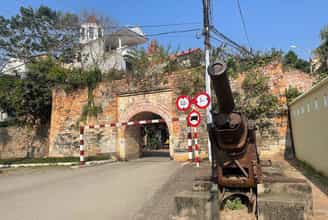
Lang Son Ancient Citadel, also known as Doan Thanh, is located in Chi Lang ward, Lang Son city. Through studying historical documents, Lang Son Ancient Citadel was built a long time ago. In Chinese documents written about the Song and Ming dynasties, there are records. At that time, Truong Phu (a general in the Ming Dynasty - China) after conquering our country and imposing colonial rule, strengthened the organization of the political apparatus in the area. Legend has it that during this time he built Khau On citadel. Regarding the construction of Doan Thanh, there is another legend that the Citadel was built by two fairies who came down to help build it. Perhaps that is why the Ancient Citadel also has another name, "Citadel built by Tien". According to Dai Nam Nhat Thong Chi: "... In the 26th year of Hong Duc's reign, the Le Dynasty (1495) citadel was restored...". Based on some of the documents mentioned above, it can be predicted that Lang Son Citadel was built during the Ly or Tran dynasties around the 12th and 13th centuries. The citadel was built on wide and flat terrain, covering a large space of Lang Son city (formerly known as Thanh Lang). Surrounding the citadel are mountains and Ky Cung river flowing through. Those mountains are also called Hoi Doan mountain (north), and Cong Mau mountain in the south. The architecture of Doan Thanh is like other ancient citadels with high walls and deep moat... (the moat here is the winding Ky Cung river). Surrounded by checkpoints located in communes and continents near and far, there are a total of 19 checkpoints, 3 checkpoints and 26 checkpoints. The citadel's walls were built of "mound bricks", a type of large-sized ancient brick, the 4m high vertical wall is very difficult to penetrate and attack from the outside, however, there was a time "... Doan Thanh was attacked three times. fell, the people of seven continents were forced into a miserable situation. The inner western and southern walls of the citadel were covered with soil up to the citadel's surface, at the base of the citadel was a 10m wide soil embankment, on the citadel surface was a 3m wide soil embankment, very convenient. beneficial for the majority of soldiers participating in combat. The height of the inner earth wall is equal to the height of the outer wall, forming a sturdy square trapezoid with a gentle slope that is very convenient for deploying soldiers to the surface. Citadel, in the southwest corner where the western and southern walls meet, there is a small earthen mountain called To Son. The inner eastern and northern walls are not covered with earth, but on the surface of the wall there are pearl holes. apricot; On top of the brick citadel wall, brick walls were built projecting on both sides, each side 0.1m to form a durable roof to protect the citadel wall. The ancient citadel currently has two remaining gates (one gate in the West and one gate in the South). , the city gate was designed and built in the Van Ban (Vo Bang) architectural style of France. Doan Thanh is not only located on rugged terrain, it is also considered sacred land. According to folk legend, this is also the meeting place of Princess Lieu Hanh (Holy Mother) and Trang Bung - Phung Khac Khoan. The ancient citadel was a major military, political, economic and cultural center of Lang Son during the feudal period. Besides, the Ancient Citadel also clearly demonstrates its important role and position in the matter of relations with the Northern feudal dynasties. This is the border crossing point, the place of communication between the two countries Dai Viet - China. The ancient citadel has 4 main gates in the four directions East, West, South, North and corresponding to these 4 gates are 4 sacred temples called: Dong Mon Tu, Tay Mon Tu, Nam Mon Tu, Bac Mon Tu (now called are: East Cua Temple, West Cua Temple, South Cua Temple, North Cua Temple) those are the four gods guarding the four sides of Doan Thanh. Scientists have recognized this as the four unique sacred Lang Son ancient citadels. With all the above meaning and importance, Lang Son Ancient Citadel relic was ranked as a National relic by the Ministry of Culture and Information in 1999. Source: Lang Son Provincial Museum Electronic Information Page
Lang Son
8359 view
Rating : National monument
Nearby tourist attractions
See all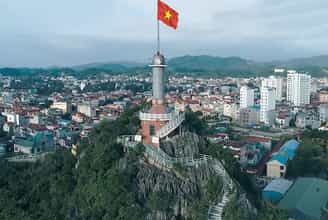
Phai Ve flagpole
The mountain is located in the east center of Vinh Trai ward, Lang Son. Before crossing the Ky Cung river, you will see a mountain with a red flag with a yellow star fluttering in the distance. That is Phai Ve Lang Son mountain. Seen from a distance, Phai Ve mountain emerges right in the heart of Lang Son city, among the overlapping houses with red tile roofs. That's why this mountain is also called "the rockery of Lang Son". Having gone through many historical periods, the mountain still stands tall and is the pride of the people here. Phai Ve Mountain is an archaeological relic with the greatest historical and cultural value in Lang Son. Inside this mountain are two cave sites with paleontological traces. These two caves are about 10,000 years old and nearly 5,000 years old. Now when combined with magical lights, the stalactites in the cave become extremely lively and sparkling, attracting tourists to visit and explore. Understanding the historical value and tourism potential, the government here has taken many measures to restore and preserve these unique wild beauties. Phai Ve mountain flagpole can be considered one of the famous symbols of Lang Son city. Located on Phai Ve mountain at an altitude of about 80m, this flagpole includes 535 firmly built stone steps. The entire flagpole is built of durable materials such as concrete and stone. The railing of the stairs going up is made to look like green bamboo stalks, looking quite similar to the Great Wall. Perhaps because the image of the towering flag tower with winding stairs is quite similar to the Great Wall. So this place is known as the miniature version of the Great Wall of Vietnam. You can travel by motorbike or car to Lang Son city center. Then park the car and walk up the mountain. Moving up the flagpole is extremely simple and easy. You will feel cool and comfortable as soon as you finish climbing the mountain because of the cool fresh air while on the mountain. With a high location and right in the heart of the city center, you can stand right on the high steps to see the panoramic view of poetic Lang Son. The whole city seemed to collapse into view. The most impressive is probably the scene at night when the shimmering lights of the streets and houses spread out vastly right below your feet. In the evening, lights also light up at the Flag Pole with nearly 1,000 LED bulbs installed. Under the steps, in the cave and around the mountain are also beautifully decorated with lights. Making the Flagpole look like a bright torch, lighting up and radiating the whole city. The entire Phai Ve mountain exudes a magical beauty under the cold weather of the night. You can go to Phai Ve mountain at any time of the year. Because the landscape here does not depend too much on the weather. However, you should combine visiting many tourist destinations in the same Lang Son trip. The most perfect time is a festival like the Tam Thanh festival on the full moon day of the first lunar month every year. You can combine visiting Phai Ve mountain and going to the pagoda at the beginning of the year, along with scenic spots such as Tam Thanh cave, Chi Lang pass, Chua Gieng... very convenient.
Lang Son
7786 view
From January to December
Citadel of the Mac Dynasty
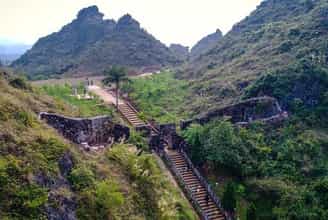
The citadel of the Mac Dynasty is a destination associated with history, reflecting the ancient feudal regime. This location is about more than 150km from the center of Hanoi, attracting a large number of tourists every year. The city walls are solid and sturdy, remaining unaffected through all the sun and rain. However, currently, the city walls have been gradually demolished, only about 300 meters remain. The Mac Dynasty citadel has a prime location, right in Tam Thanh ward of Lang Son city. The wall leans against three majestic mountains: To Thi, Mac Kinh Cung and Lo Cot. These are also scenic spots that attract many tourists to visit. Standing from the top of the city wall to admire the majestic scenery below, you will witness the entire poetic city of Lang Son below. In 2010, the Mac Dynasty Citadel began to be invested and repaired by the province to develop into a tourist and sightseeing destination. To admire the majestic mountains, you need to climb 100 steps around the mountainside to reach the top. The northern wall is 54m long and 4m high, built with many secret battlements to destroy enemy troops. The cave is 75km long with 7 gates and 15 battlements. Recalling history, this city wall was built by Mac Kinh Cung in the 16th century and was completed in the mid-17th century. The purpose was to fight against King Le - Lord Trinh, so the project was built extremely majestic and solid, the stone blocks were connected together with honey and molasses, extremely sturdy. In 1962, this place was granted historical relic status and then began to undergo renovations to welcome visitors. Visitors can visit this historical building all year round to witness firsthand its historical values and accompanying mysterious stories. However, to have the best experience, you should avoid going in winter. Because the temperature in Lang Son mountains at this time is quite low. Therefore, many people will not be able to withstand the cold here. When planning to visit this destination, keep in mind the following experiences to make your trip complete: You should wear sports shoes or soft shoes that are convenient for movement. Because the terrain here is quite dangerous, you have to climb steps, which are especially slippery if it rains. The clothing you choose needs to be comfortable. If you are a woman, you should wear clothes instead of skirts to move quickly and safely. When reaching the top of the Mac Dynasty Citadel, the temperature may drop lower, especially in winter. So you need to dress warmly and bring a jacket to avoid getting cold. You should visit the construction site early in the morning to avoid crowding and jostling, causing unsafe conditions. You can prepare extra food and water so that when you reach the top of the citadel, you can stop to replenish your body's energy and avoid losing strength due to long walks. For tourists who are passionate about checking in, they need to choose safe locations, absolutely do not move to mountain edges where mistakes can easily occur.
Lang Son
7521 view
From January to October

Chi Lang Pass
Chi Lang Pass is a famous tourist destination. If you come to Lang Son, you definitely cannot miss this place. This place is associated with the heroic historical marks of our nation in the fight against foreign invaders. At the same time, it also possesses majestic mountain beauty bestowed by nature. Chi Lang Pass is a historical relic deeply engraved in the subconscious of the Vietnamese people, it appears in poetry and is passed down from generation to generation. Located about 150km from Hanoi, the pass is large and massive, running nearly 20km long. It connects Chi Lang and Huu Lung districts of Lang Son province. Looking down from above, Chi Lang Pass appears with towering rocky mountains, typically the Kai Kinh rocky mountain range in the West and Bao Dai Mountain in the East. All create a solid framework to protect the safety of Vietnam's northern border, supporting the Vietnamese people in protecting their territorial sovereignty and fighting against foreign invaders from ancient times to the present. Chi Lang Pass and our army and people have gone through many ups and downs in history, blocking expeditions from the North. The gate is associated with military activities from the reigns of Ly Thuong Kiet, Tran Quoc Tuan... and is famous in history. In addition to historical relics, visiting Chi Lang Pass, you can also see with your own eyes a majestic natural picture, a bit poetic but also very close and dear. Especially the high mountains, rugged terrain with trapezoidal battlements that are "unique" in the world. Surely this will be a great tourist destination for activities to experience and explore Vietnamese history from time to time. And it's also an opportunity to relax in cool, fresh nature. Besides, you can also experience the wonderful dishes typical of Lang Son people such as roasted pig and roasted duck.
Lang Son
8286 view
From January to December

Dong Dang Mother Temple
Dong Dang Mother Temple in Lang Son is a sacred temple, with great value in terms of religion, history and belief. Surely this will be a spiritual cultural tourism destination that you cannot miss when coming to Lang. Dong Dang Mother Temple worships Buddha and Saint Mother Lieu Hanh. This place is considered one of the most sacred temples worshiping Mother Goddesses of the Vietnamese people. Since ancient times, the temple was also known as "Dong Dang Linh Tu". According to historical records, Dong Nam Mau Temple was originally a pagoda located on a rock roof close to the foot of the mountain. Because it is famous as a sacred temple and is visited by people from all over the country for pilgrimage, the worship space is increasingly cramped. Since then, local people have moved the temple to its current location. People have passed down since ancient times that Lieu Hanh is the daughter of the Jade Emperor, whose name is Quynh Hoa. She had a deep bond with the world, so she often appeared to help her people. The court of the Later Le Dynasty ordained her as Princess Lieu Hanh, the Supreme God of Phuc. One day, she traveled and stopped at the land of Lang Son - a place with beautiful landscapes of mountains and water. The princess saw an abandoned temple in the dense forest, the Buddha statue had no incense smoke. Then the princess met Phung Khac Khoan and reminded Trang Bung to repair the temple. Afterwards, the pagoda was renovated and became a place to worship Buddha and the sacred Mother Goddess. Dong Dang Mother Temple owns a spacious campus, located close to the foot of the mountain. The Three Entrance Gate part was built with majestic ancient architecture, the door is built with a rolling arch, has a main door and 2 side doors. The gate is decorated with many unique motifs and patterns. The top of the three-entrance gate has a bronze bell and a bronze bell. Coming here, you will be able to admire the beauty of Dong Dang Mother Temple, leaving behind the noise and bustle of the city you live in. Return to Lang, visit the ancient and sacred temple, and enjoy moments of relaxation and comfort. It will definitely bring you interesting experiences and a happy and healthy spirit.
Lang Son
7873 view
From January to December

Dong Kinh Market
Dong Kinh Market is a place for trading between small traders and large industrial and commercial enterprises between the two boundaries of Vietnam and China. The market is also the largest shopping and business center in Lang Son city. The market operates all day, always bustling and crowded, especially in Thap De and January, when festivals take place in Lang Son city and in the whole Lang Son province. The market is surrounded by 4 main roads: Phai Ve, Nguyen Tri Phuong, Ba Trieu and Nguyen Du so it is very convenient for transportation. The market has 3 floors with each floor selling different items: the 1st floor sells electronics, the 2nd floor sells groceries, and the 3rd floor sells fashion. It can be said that, with its location near the Vietnam - China border, Dong Kinh market has an extremely wide variety of products and designs. This place is known as "Shopping Paradise" for shopping fanatics. Customers do not need to worry about their wallets because Dong Kinh market sells goods at moderate prices, not expensive. Most of the sources here come from China and Vietnam. When it comes to cuisine in Lang Son, especially at Dong Kinh market, you definitely cannot miss the specialty dishes here: egg rolls, fried rice cakes, sour pho, dumplings, roasted pork, bamboo-tube rice,... These dishes are sold in the market or outside the market, so you can easily find and buy and taste the typical flavors of this Vietnamese-Chinese market. Because the market sells a variety of goods, be careful and delicate in bidding because there is no standard or fixed price. In particular, with Chinese products, you need to evaluate and review carefully before buying to avoid buying fake or poor quality products. In addition to items originating from China, Dong Kinh market also sells many items 100% originating from Vietnam such as brocade items handcrafted directly by the hands of ethnic minorities. Those are great gifts that you can buy as gifts for relatives and friends.
Lang Son
7684 view
From January to December
 AI Travelviet